Mentoring is an ongoing relationship in which a more experienced person shares guidance, support, and perspective to help someone grow. For a lead developer, that means more than answering technical questions: it means helping a mentee build confidence, navigate workplace challenges, and plan a career. The relationship can teach the mentor, too. section 9.0 section 9.1.1
A mentor is not the same as a trainer. Training usually targets a defined skill through structured instruction. Mentoring follows the person: mentor and mentee meet over time, discuss problems as they arise, and adjust their work to the mentee’s goals. A mentoring program centered entirely on training can miss that flexibility. section 9.1.1
Build the relationship deliberately:
- Ask what the mentee wants to achieve and how they prefer to learn. Some want hands-on coaching; others want resources and room to solve problems independently. section 9.1.3 section 9.5.4
- Make it safe to ask for help. Listen without judgment, keep discussions confidential when promised, and give notice if a meeting must move. Email or chat can keep contact going. section 9.2
- Offer specific, constructive feedback rather than generic advice or put-downs. Share knowledge even when a mentee becomes stronger than you in a skill. section 9.1 section 9.1
- Let the mentee drive their goals and follow-through. Gradually give them responsibility so they can make decisions and gain confidence rather than depend on your answers. section 9.5.4 section 9.1.3
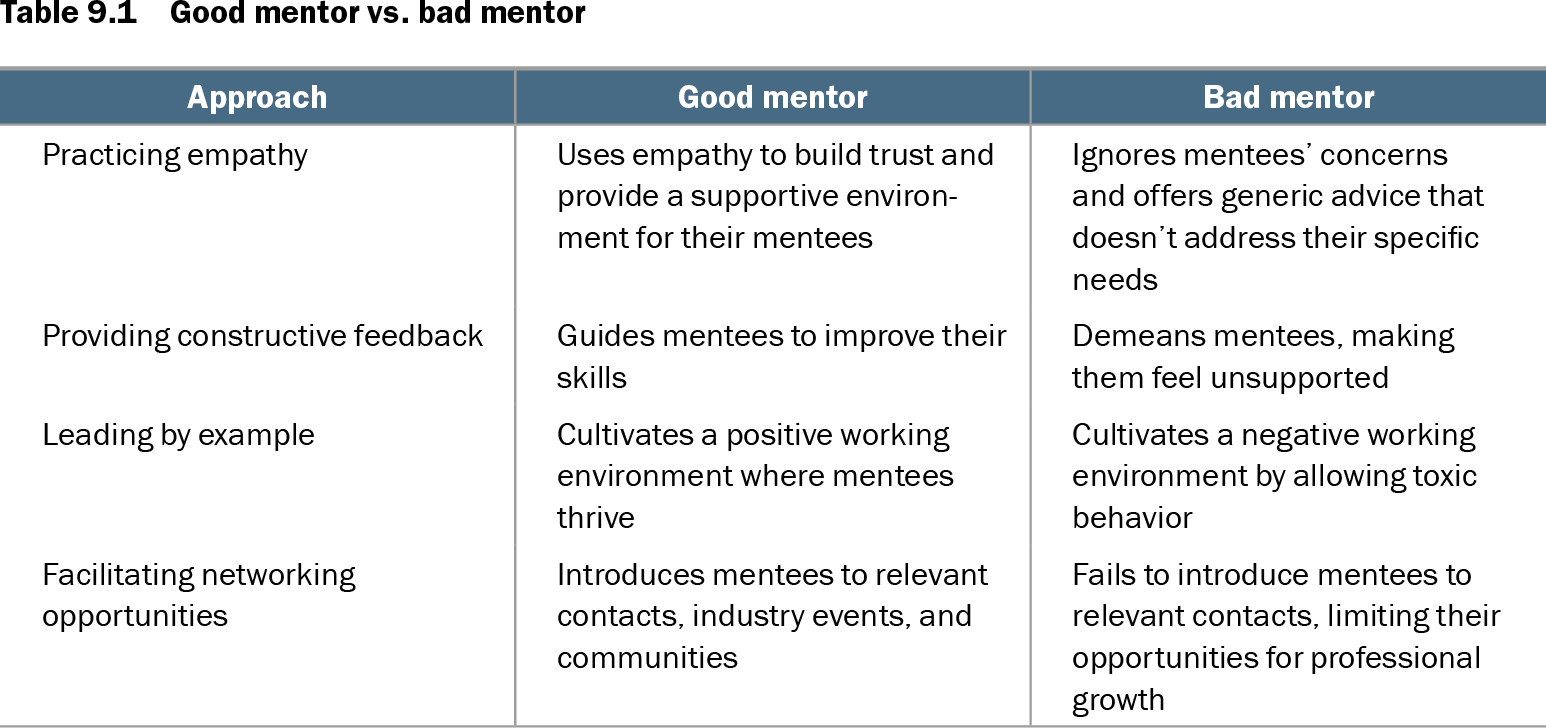
Table 9.1 Good mentor vs. bad mentor (view table figure)
| Approach |
Good mentor |
Bad mentor |
|---|---|---|
| Practicing empathy |
Uses empathy to build trust and provide a supportive environment for their mentees |
Ignores mentees’ concerns and offers generic advice that doesn’t address their specific needs |
| Providing constructive feedback |
Guides mentees to improve their skills |
Demeans mentees, making them feel unsupported |
| Leading by example |
Cultivates a positive working environment where mentees thrive |
Cultivates a negative working environment by allowing toxic behavior |
| Facilitating networking opportunities |
Introduces mentees to relevant contacts, industry events, and communities |
Fails to introduce mentees to relevant contacts, limiting their opportunities for professional growth |
Compare supportive and harmful mentor behaviors across empathy, feedback, example-setting, and networking. section 9.1
Mentoring through a career decision
A developer considering a lead role could ask several experienced people for feedback on their strengths, gaps, and readiness. Different perspectives offer a sounding board without requiring them to copy one person’s leadership style. They can then choose goals that fit their own ambitions. section 12.2.1
Senior developers can mentor junior colleagues even if they do not want to become leads. Mentoring can also extend beyond an organization through developer communities and events. As mentees gain skill and learn to explain it, encourage them to guide someone else. Start with one person’s goals, keep showing up, and remain willing to learn from them. section 9.4.1 section 9.4.2 section 9.2