Meta prompting uses a prompt to generate a structured prompt template from a plain-English task description. The result is ready to use or refine, reducing the need to write each template by hand. section 9.2
A practical generation cycle:
- Describe the task and what a well-formed template should look like. section 9.2
- Have the model produce a complete, structured prompt template, then use or refine it. section 9.2
Precision matters: vague descriptions tend to produce generic instructions without enforced output structure. Familiarity with prompt structure and patterns helps make the task description specific enough for a useful result. section 9.2 section 9.0
Figure 9.1 Advanced pattern selection: comparison of CoT, meta prompting, and ReAct, showing how each pattern differs by reasoning visibility, prompt design requirements, and dependence on iterative interaction with external systems
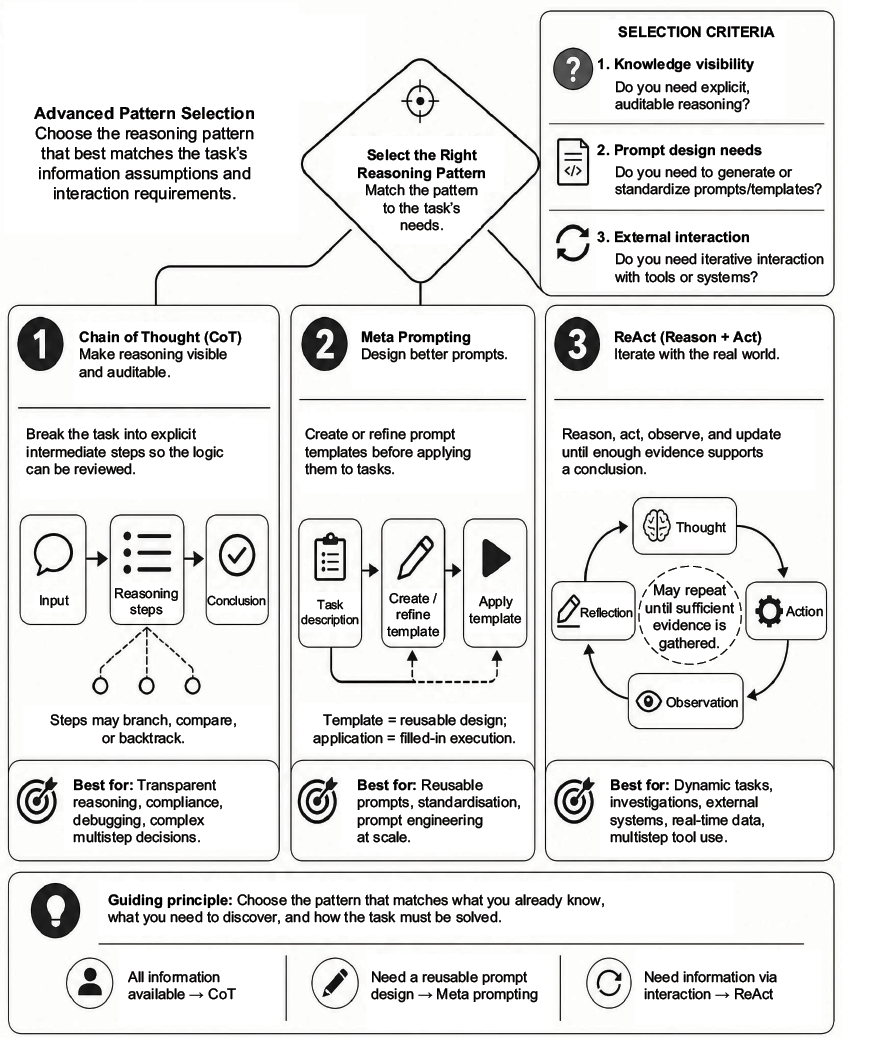
Compare meta prompting with chain of thought and ReAct when choosing an advanced prompt pattern. section 9.0

