A metaheuristic, also called a guiding heuristic, is a heuristic for choosing or applying other heuristics. Design heuristics address particular design problems; guiding heuristics help a group decide how to work with those problem-solving moves. They can capture practical knowledge that otherwise remains implicit, then make it shareable, adaptable, and open to revision. section 3.2.1
Use metaheuristics as situational prompts, not automatic rules. A stalled discussion, an oversized group, repeated use of one collaboration style, hidden assumptions, or weak engagement can each call for a different response. The aim is to improve the group’s ability to discover perspectives, create a shared model, and decide what to do next. section 3.5 section 4.8
Useful prompts for shaping collaborative work include:
- Test assumptions with a sensemaking exercise when unspoken concerns or differing mental models may be blocking progress. section 4.3.4
- Let participants model alone before merging; merge from the most complete model rather than treating accuracy as the sole criterion. section 4.5.1
- Postpone excessive structure when diverse insights are needed; deliberately balance structure with productive chaos. section 4.5.1
- Split an in-depth modeling group of more than seven people, then walk through and merge the smaller groups’ work. section 4.5.2
- Change collaboration style after using the same style with the same group for a while, especially when fresh learning is needed. section 4.5.10
- Visualize a conversation that has stayed confused or unresolved for about five minutes. section 4.5.8
From individual views to a shared architecture model
A team can first draw its own view of an architecture in silence, then share every model and choose one as the foundation for merging the rest. This approach preserves several valid perspectives before convergence. Add a legend to the resulting model so people who were absent can interpret it. When the problem is new, allowing initial individual work and some unstructured exploration can surface insights that a tightly directed session might miss. section 4.5.1
Figure 4.16 An example of using the together, alone style in a collaborative modeling Bytesize Architecture Session
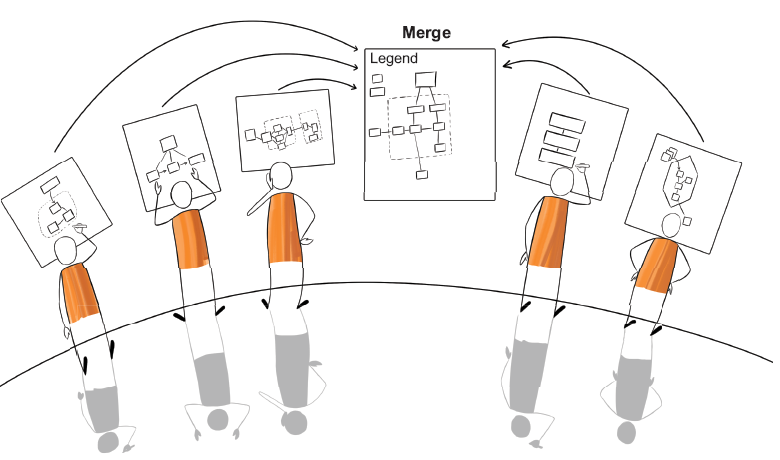
The figure illustrates the Together, Alone pattern: separate architecture models become input to one shared model, making the merge heuristic concrete. section 4.5.1
Metaheuristics also guide how people participate. To invite engagement, a facilitator can ask questions that are intentionally imperfect, allowing others to correct them. Someone who is not facilitating can surface a noticed group pattern from their own perspective and needs rather than taking over the facilitator’s role. Where power, tension, or competing values appear, make the pattern discussable: validate a suspected polarity and ask whether examining it now would add value. section 4.5.8 section 5.4.6 section 10.1.3
At decision time, guiding heuristics keep the group from mistaking agreement for commitment or vague comparisons for evidence. After choosing a direction, ask people who did not favor it what they need to go along with it, then decide what can be added. In a Pros-Cons-and-Fixes discussion, treat words such as “better,” “more,” or “less” as invitations to identify the concrete consequence and its comparison point. section 9.2.3 section 11.1.1


