Microsegmentation divides a network into finely grained, isolated zones with distinct access controls. It limits lateral movement by placing more sensitive services behind stronger controls and monitoring. section 9.2
Protecting medical records
Separate appointment management from medical-records services. If attackers compromise the appointment API, isolation prevents them from reaching medical-records data. The sensitive service can receive stricter access controls and enhanced compliance monitoring. section 9.2
Figure 9.12 Using a combination of API gateway and bastion server, we make sure that our APIs expose only well-documented, tested, secure endpoints to the internet while keeping internal endpoints or endpoints in development accessible only by internal users and developers.
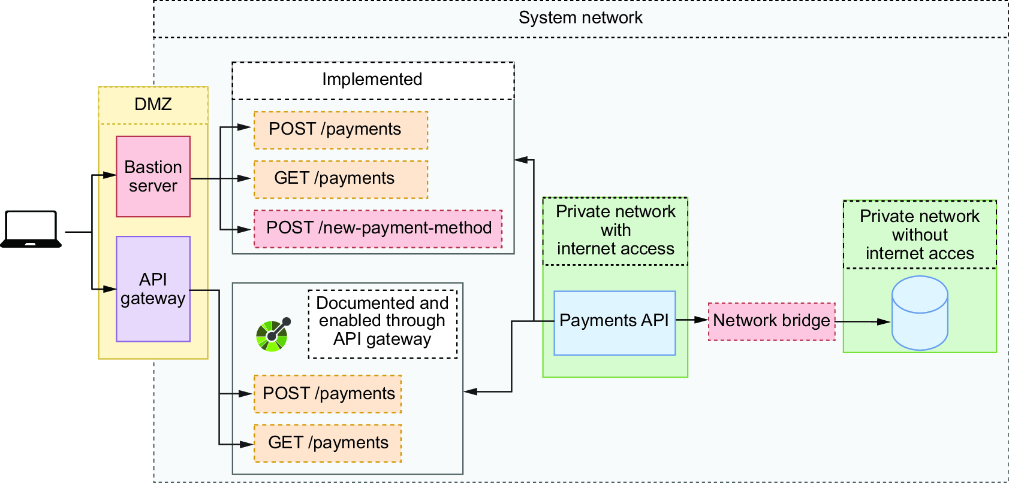
Use an API gateway and bastion server to expose only tested, secure endpoints publicly while restricting internal or developing endpoints to authorized users. section 9.2
