Microsoft Defender for Containers provides unified protection for containerized workloads and Kubernetes environments, where short-lived containers, immutable images, exposed applications, and overpermissioned roles create distinct security risks. section 7.2.2
Exposed Kubeflow dashboard
An internet-facing Kubeflow dashboard can allow unauthenticated access. Attackers may exploit its highly privileged container, reach the cluster control plane, deploy cryptomining images, and increase Azure consumption. Defense therefore spans the container registry, cluster control plane, and worker nodes. section 7.2.2
The plan combines three container-security capabilities:
- Run-time threat detection for nodes and clusters. section 7.2.2
- Vulnerability assessment for container images. section 7.2.2
- Hardening and Kubernetes policy. section 7.2.2
Enable the Containers plan at the Azure subscription level with Azure CLI: az security pricing create -n Containers --tier 'standard'. The resulting pricing resource reports a Standard pricing tier. section 7.2.2 section 7.2
Figure 7.3 An example of an attack targeting Kubernetes clusters through an exposed Kubeflow dashboard
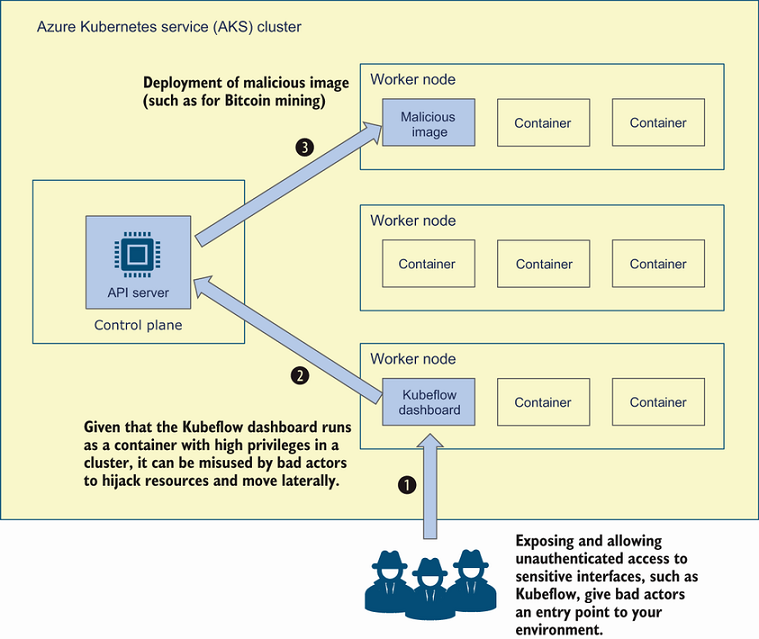
Trace how an exposed Kubeflow dashboard can lead from unauthenticated access to control-plane compromise and malicious container deployment. section 7.2.2
