Modular entropy multiplication (MEM) constructs a hardware random number generator from analog electrical noise. It amplifies the noise, drives large voltage fluctuations through simple rules, and supplies a physical model for monitoring output health. section 2.2.1
MEM’s engineering role is to combine entropy generation with ongoing health assessment:
- Accepts an analog noise source, potentially produced by electrical-noise methods such as avalanche or Zener effects and ring oscillators. section 2.2.1
- Amplifies the source noise and repeatedly drives the voltage between dramatic fluctuations according to simple rules. section 2.2.1
- Uses a physical model to assess RNG health, addressing a limitation of avalanche- and Zener-diode constructions that lack a good health-assessment mechanism. section 2.2.1 section 2.3
- Serves as a newer TRNG construction intended to resist attacks aimed at other electrical-noise-based RNGs while remaining low-cost and resistant to electromagnetic interference. section 2.2.1
Figure 2.4 TRNGs sample physical phenomena to generate random numbers.
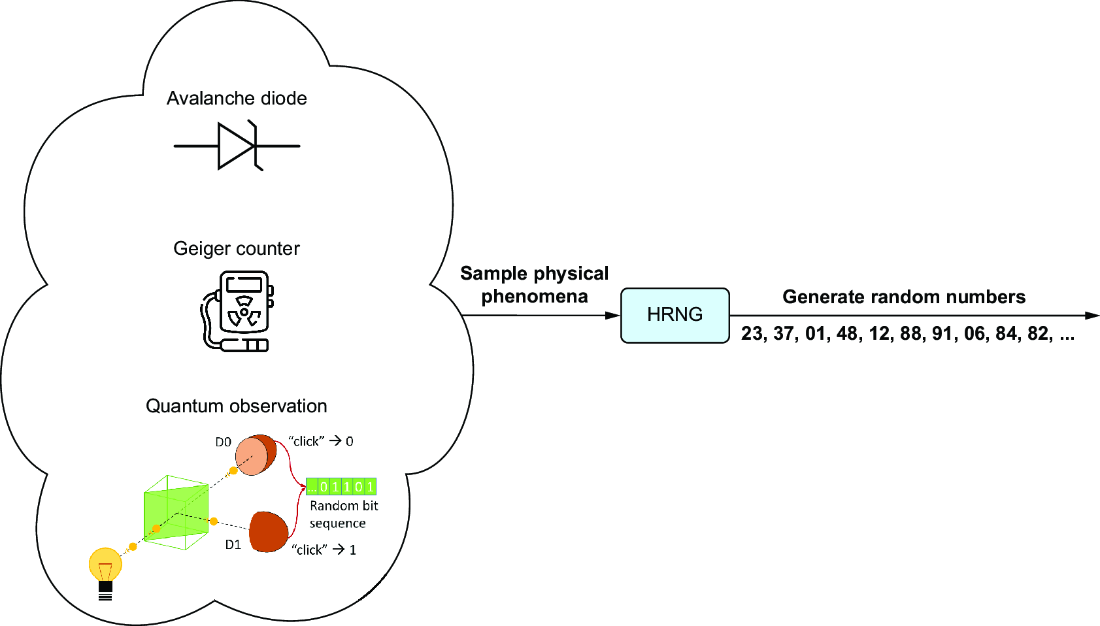
Use the figure to place MEM within the broader TRNG pattern of sampling physical phenomena for unpredictable output. section 2.2.1
