MQTT is a lightweight publish-subscribe messaging protocol for asynchronous communication between machines. It is especially popular in Internet of Things (IoT) systems. section 9.1
In a service architecture, MQTT can connect an asynchronous backend API to an API gateway. The gateway translates that interface into a unified style, such as REST, so clients do not need to integrate with multiple API styles directly. section 9.1
MQTT behind an API gateway
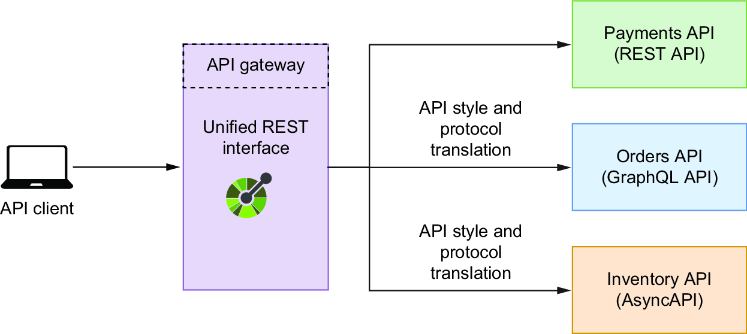
An e-commerce backend might expose REST, GraphQL, gRPC, and asynchronous APIs using MQTT. An API gateway can translate these interfaces and present consumers with a consistent REST API. section 9.1
Figure 9.3 An API gateway can serve as a protocol and API style translation layer, helping us provide a unified API style to our consumers. Our backend might consist of GraphQL, REST, and asynchronous APIs, and we can expose them all as a REST interface through an API gateway.
Use the diagram to see how an API gateway translates MQTT-based asynchronous APIs alongside REST, GraphQL, and gRPC. section 9.1
