Multitenancy lets one application serve multiple tenants while keeping their accounts, data, configurations, or usage contexts logically separated. In model-serving systems, tenants share the software while receiving predictions from models trained for their own data. section 6.3.2
A multitenant HPO service must isolate resources so different users or groups remain within their boundaries. This requirement complements fault tolerance, which allows sequential trials to resume after failures, and portability, which decouples execution from infrastructure. section 5.3.1 section 5.3.1
Tenant-specific chatbot models
A chatbot serves schools, retail stores, or other organizations through the same application. Each tenant has a separate account and segregated data, trains an intent-classification model with its own dataset, and receives predictions from that tenant's model. A model cache keeps model graphs and dependent data in memory so one prediction service can serve multiple models; a model file server supplies the model files. section 6.3.2 section 6.3.2
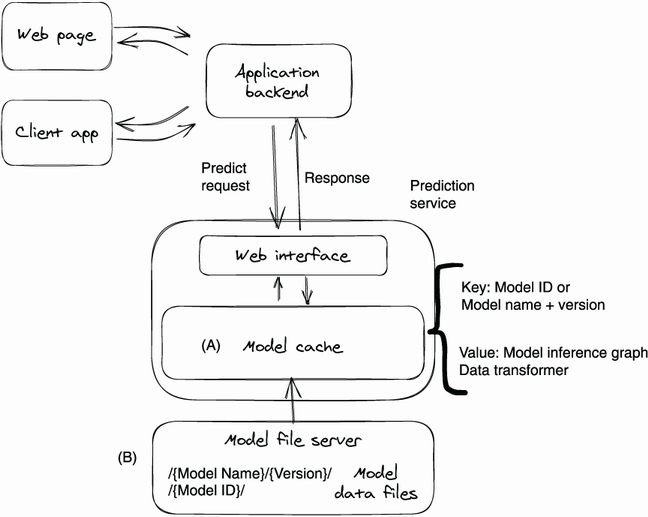
Use the architecture diagram to inspect how model caching and model-file retrieval extend a prediction service for multiple tenant models. section 6.3.2


