Multi-cloud deployment places a common platform across multiple independent public clouds, private clouds, or on-premises data centers. It supports applications that need provider redundancy, regional resilience, data locality, edge operation, or consistent Kubernetes-based operations. section 7.0 section 10.1.2
Common deployment patterns include:
- Multicloud: deploy across GCP and one or more non-GCP public clouds such as AWS or Azure. section 10.1.2
- Hybrid cloud: deploy across GCP and one or more on-premises data centers. section 10.1.2
- Multi- and hybrid cloud: combine GCP, non-GCP public clouds, and on-premises environments. section 10.1.2
The platform provides a common interface across environments whose networking, storage, compute, and resource-management models differ. This standardizes deployment, scaling, security, and development, but increases operational complexity and demands broader infrastructure, development, and security expertise. section 7.1 section 10.1.2
Cross-environment deployments require connectivity to GCP through Cloud Interconnect, Cloud VPN, or the public internet. Dedicated Interconnect uses a direct physical connection and supports highly available, low-latency transfer for large data volumes. section 10.1.2
Regional and provider resilience
A regulated banking application can span multiple clouds and regions so an outage of one provider does not become the accepted downtime plan. Kubernetes-based deployment patterns can move workloads across regions and availability zones while preserving a common operational model. section 7.1
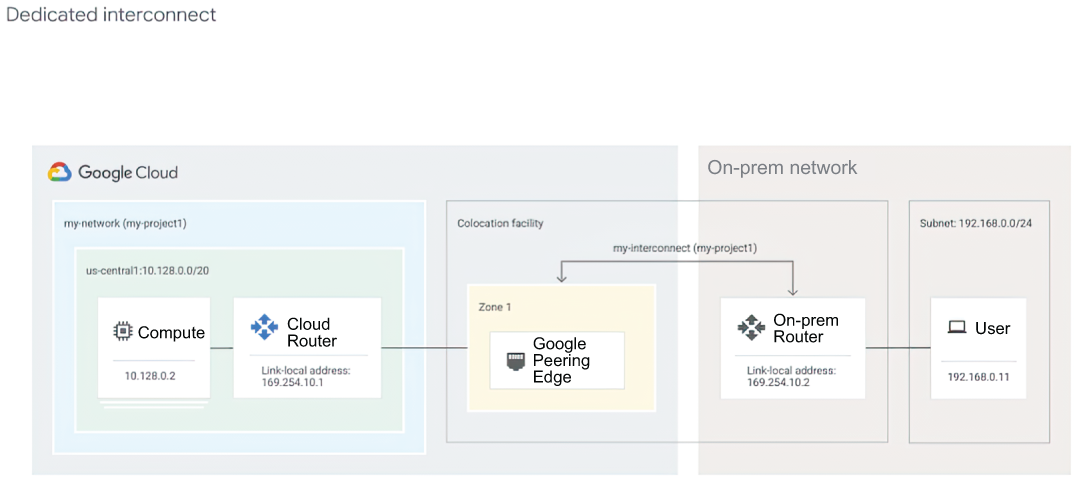
Use the Dedicated Interconnect diagram to inspect the physical network path between GCP and an on-premises data center. section 10.1.2


