A mutation operator creates a changed copy of a candidate during evolutionary search. For text artifacts such as prompts, mutation becomes a semantic edit written by a model. section 4.6 section 4.3.1
A blind mutation guesses at an edit; a targeted one uses a diagnosis of the run to address a named gap. Reflection supplies that diagnosis, while mutation makes the edit. With an LLM proposer, the amount of change is difficult to control or measure. section 4.2.2 section 4.3.1
Fixing a prompt from a failed run
When an agent reports wrong totals, reflection can inspect its tool-call trace and identify missing rules. Mutation then rewrites the prompt to add those rules instead of making an unguided change. section 4.2.2
Figure 4.5 A blind edit beside a reflected one. On the left, a blind proposer sees only the wrong answer and guesses; on the right, the reflector reads the whole run, the answer and the steps that led to it, works out a likely missing rule, and hands the mutation a specific target. Same model and same task, so the only difference is what the proposer was allowed to see.
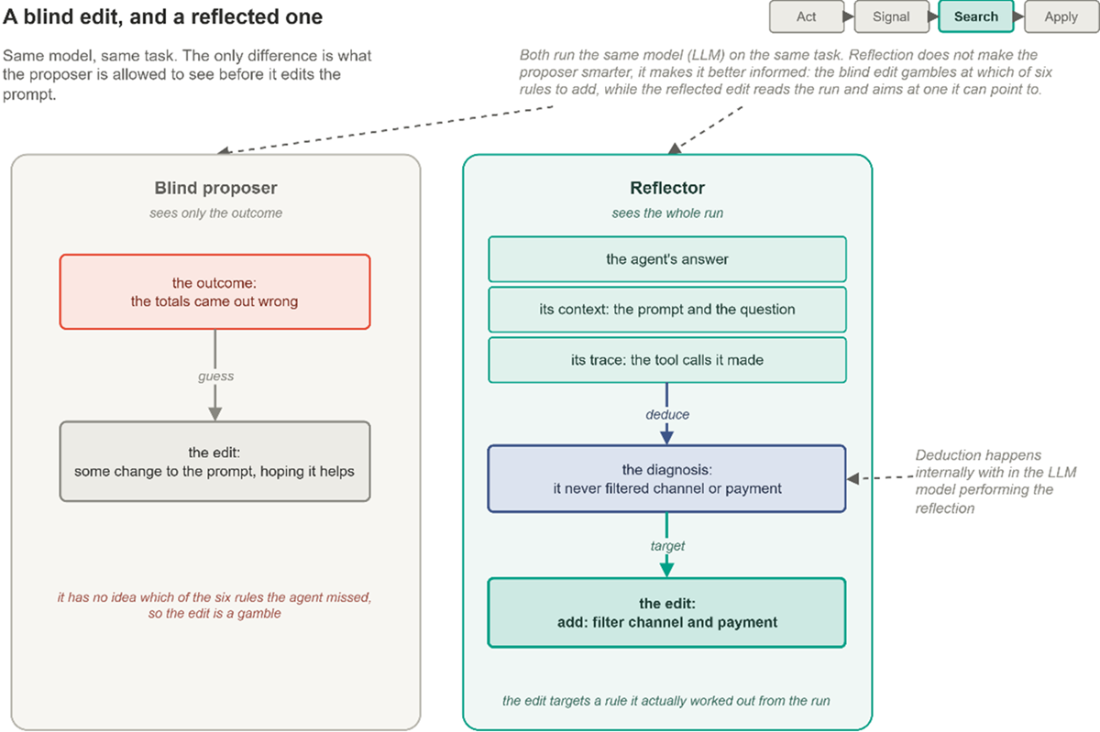
Compare a blind edit with one guided by the full run and a specific diagnosis. section 4.2.2