liveBook · Manning

Mutual TLS

As explained in Logs and Telemetry

Mutual TLS is a TLS mode in which both communicating endpoints authenticate each other with certificates.

Mutual TLS (mTLS) extends TLS so communicating endpoints authenticate each other with certificates. In an enterprise Fluent Bit observability pipeline, it protects traffic between distributed deployments and central operations. section 11.7

Operationally, mTLS is positioned as a deployment upgrade:

  • Apply TLS to communications carrying OpenTelemetry Protocol traffic and forward-protocol edge cases. section 11.7
  • Extend TLS to mutual authentication when infrastructure can roll out certificates quickly. section 11.7
  • Use the pattern between distributed MMS deployments, central Fluent Bit, and operations infrastructure. section 11.7
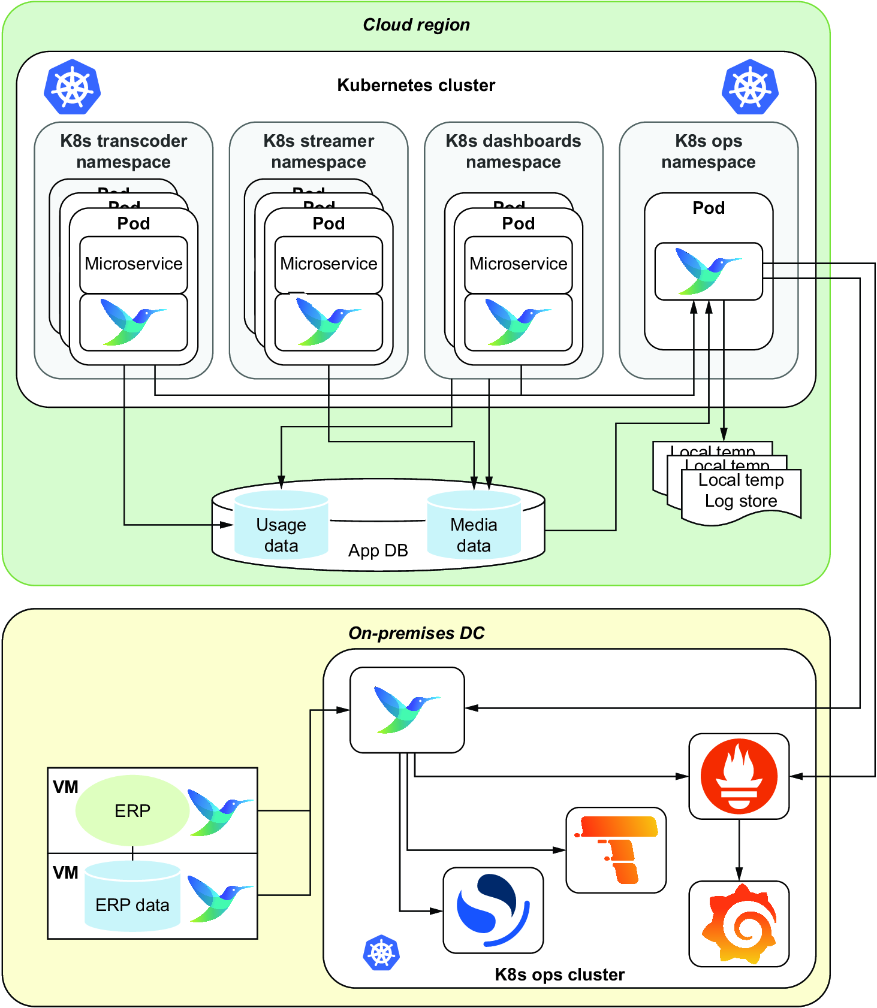
Figure 11.2 Architecture of our use case, made up of modern cloud-native technologies and private data center deployments using virtualization and private Kubernetes clusters
figure

Use the architecture to trace where TLS and prospective mTLS fit between distributed customer deployments, private infrastructure, Kubernetes clusters, and central operations. section 11.7


How Logs and Telemetry covers it

How deep it goes
Defines mTLS as a planned extension of TLS but defers certificate rollout and configuration details.
Examples
Uses distributed MMS deployments sending telemetry to central Fluent Bit in an enterprise monitoring architecture.
What it assumes
Assumes TLS-based communications and requires infrastructure capable of rapidly rolling out certificates.
What you can do after
Operate secure Fluent Bit communications and plan mTLS adoption once rapid certificate deployment is available.
How it connects
Connects TLS with certificates, OpenTelemetry Protocol, the forward protocol, Fluent Bit, and Kubernetes deployments.

Also explained in

Compare how 8 books explain mutual TLS →

Related concepts

This explainer was generated by Manning's knowledge graph from the text of Logs and Telemetry. The section links point to the parts of the book it draws on.





