liveBook · Manning

Natural language

As explained in How Large Language Models Work

Human language is a naturally evolved system of symbolic communication used by people.

Natural language is a naturally evolved system of symbolic communication used by people. LLMs must convert it into an internal representation and convert generated representations back into language; that representation affects what they learn and how solutions can be built. section 1.9

Language alongside code

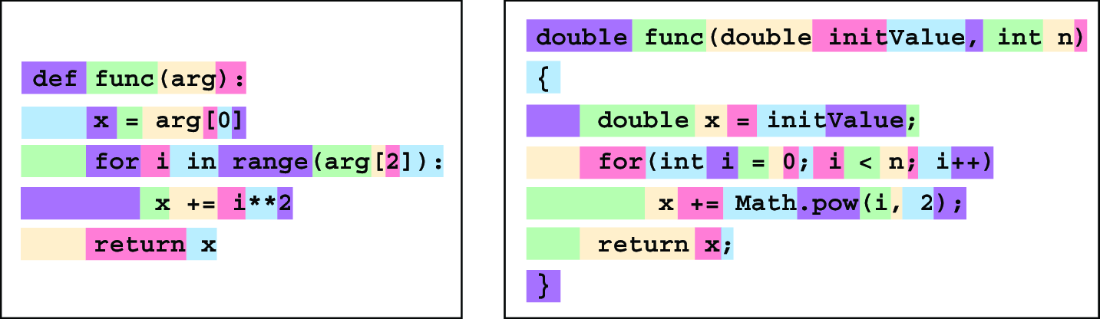
Natural language and programming languages can share tokenization patterns. Meaningful variable names and comments connect code with human descriptions of intent, helping an LLM correlate the two. section 6.1

Figure 6.2 Two similar samples of code written in the programming languages Python (left) and Java (right). These show how byte-pair encoding can identify similar tokens across different languages. The boxes show individual tokens. Standard tokenization methods for human languages do a reasonable job on code since it has many similarities to natural language.
figure

Compare Python and Java tokens to see why methods designed for human language can also process code. section 6.1


How How Large Language Models Work covers it

How deep it goes
Explains conversion to internal representations and links tokenization to code, but stops short of detailing representation formation.
Examples
Uses Python, Java, Modula-3, variable names, comments, and tokenized code to illustrate language relationships.
What you can do after
Evaluate how language representation influences what an LLM learns and how it can support software solutions.
How it connects
Connects natural language with LLMs, generative AI, tokenization, programming languages, and internal representations.

Also explained in

Compare how 4 books explain natural language →

Related concepts

This explainer was generated by Manning's knowledge graph from the text of How Large Language Models Work. The section links point to the parts of the book it draws on.

