Natural selection is the differential survival and reproduction of individuals according to how well their traits fit their environment. Variation appears constantly; variants that fit better tend to survive, reproduce, and pass on useful traits. section 4.1
The process can be understood as a repeating pattern:
- A population contains variation, such as differences in color. section 4.1
- Environmental conditions make some traits more useful than others. section 4.1
- Better-fitting individuals survive longer, reproduce more, and spread their traits through successors. section 4.1
Peppered moths
Light-colored peppered moths once blended into light surfaces, while darker moths were uncommon. Pollution darkened surfaces during the Industrial Revolution, making darker moths harder for predators to see. Darker moths therefore survived and reproduced more, increasing the spread of their genetic information. section 4.1
Figure 4.2 The evolution of the peppered moth
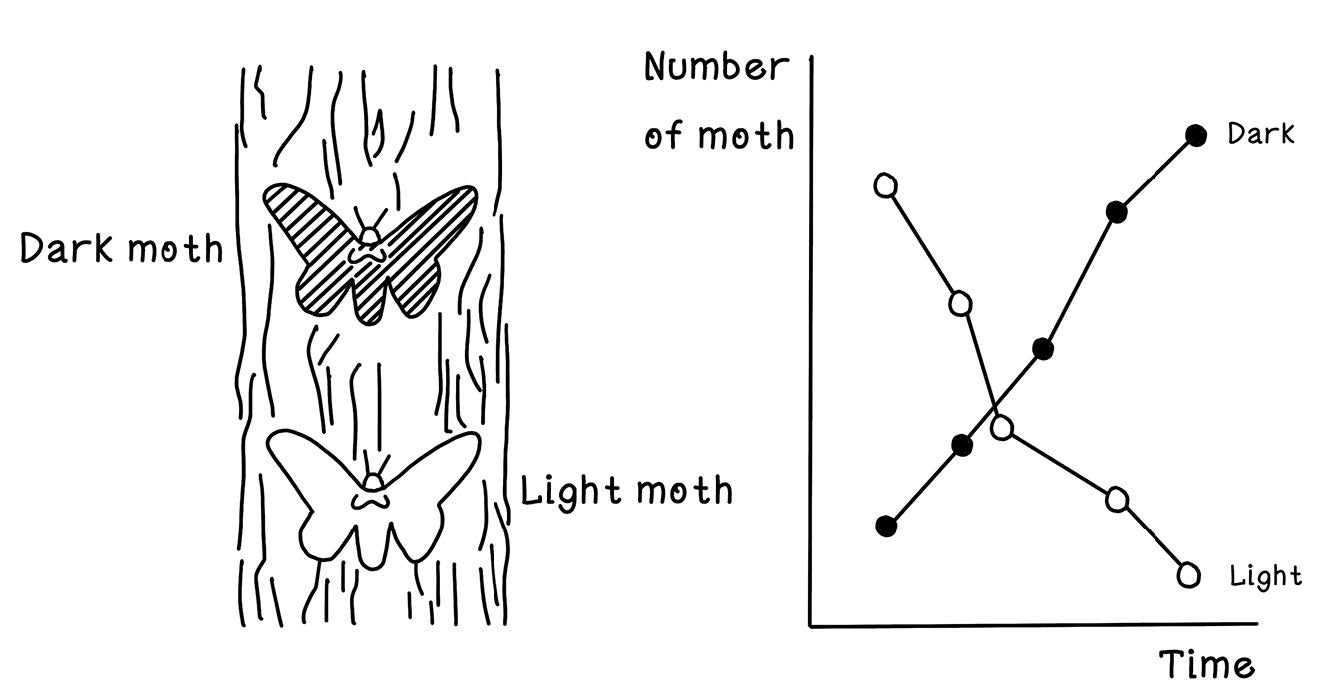
A visual sequence showing how environmental change shifts the advantage between light and dark moth variants. section 4.1


