A security perimeter separates resources and users treated as inside a security domain from those treated as outside. Traditional defenses protected this boundary with network walls, trusting what was inside and distrusting what was outside. section 1.6
Cloud services and diverse devices weaken that model: applications may sit outside the corporate network, while users connect from phones, tablets, laptops, or other locations. Access control therefore moves away from one fixed perimeter toward continuous verification. section 1.6
Apply the perimeter concept across the resources and access paths that require protection:
- Treat identity as the primary security perimeter because identities access cloud services and perform actions on resources. section 1.8
- Secure identities, data, applications, infrastructure, and networking resources rather than relying on a single network boundary. section 1.8
- Use a perimeter-less, zero trust approach that does not implicitly trust resources merely because they occupy a familiar location. section 1.6
Cloud access beyond the corporate walls
A user may reach Microsoft 365 or Salesforce CRM from a mobile phone, tablet, or personal laptop. Because these applications do not reside behind the corporate network, their location cannot establish trust; access must be verified instead. section 1.6
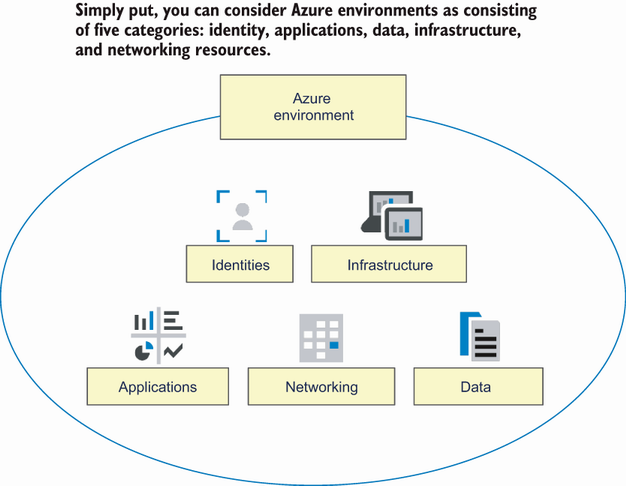
Use the resource categories to map perimeter controls across identities, data, applications, infrastructure, and networking resources. section 1.8

