A noise vector is the starting jumble of numbers from which a diffusion model makes an image. Think of it as a cloud: the model repeatedly decides which parts are noise and removes them until a recognizable picture emerges. In Stable Diffusion, generation begins with noise rather than a blank canvas. section 2.5 section 4.5
Text prompts guide the cleanup. During training, the model learns to predict noise added to an image using its description; during generation, it receives noise and removes it step by step while following the prompt. Most of this work happens in compressed latent representations rather than directly on image pixels. section 4.2.1 section 4.5
The initial noise is not just disposable static; several controls determine how it affects a result:
- Seed: A seed initializes the pseudo-random number generator. Reusing the same seed with the same prompt and other arguments reproduces the same output; using -1 in A1111 requests a random seed. section 1.2.3
- CFG scale: This setting determines how much the noise affects the final image, where noise can contribute useful detail and texture. section 2.5
- Sampler and scheduler: The sampler controls how much noise is removed at each step, while the scheduler controls step size. Different schedules distribute noise removal differently across generation. section 6.0 section 6.2.3
- Sampling steps: More or fewer denoising steps can substantially change appearance and generation time. Start with defaults, then adjust against images you already like. section 2.5
Recreate a promising image
Generate an image with a random seed, then recover its actual seed using A1111’s recycle control. Keep that seed, prompt, and other settings fixed while trying a different sampler, scheduler, CFG scale, or step count. This turns a lucky cloud into a repeatable experiment instead of chasing a vanished result. section 1.2.3 section 6.0
Figure 4.9 Guessing what the original image was by removing noise
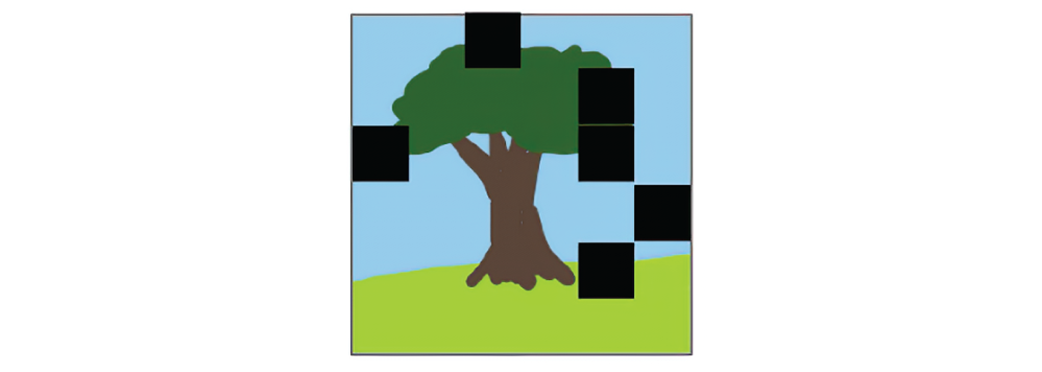
Compare the model’s estimated original image with the noisy input to see denoising as an iterative reconstruction task rather than instant image magic. section 4.2.1