None
None is Python’s singleton object representing the absence of a value or meaningful result.

Get Programming: Learn to code with Python
None is Python's special singleton value representing the absence of a value.
- How it is used
- Marks an absent value and represents the result of a function that omits a return statement.
- How deep it goes
- Explains None’s type, distinguishes it from "None", and traces its appearance when functions print or return values.
- Examples
- Uses an unnamed pet, type-identification checks, and say_name/show_kid calls to demonstrate absent values and implicit returns.
- What you can do after
- Evaluate/understand whether a function prints a value, returns a value, or supplies None automatically.
Read how Get Programming: Learn to code with Python explains None →

Python How-To
None is Python's singleton value representing the absence of a meaningful result or value.
- How it is used
- Uses None to mark a missing search result and provide a safe default for mutable function parameters.
- How deep it goes
- Explains initialization, identity checks, fresh-list creation, and implicit function returns, with a demonstration of shared mutable defaults.
- Examples
- Shows an urgent-task search, task-grouping calls with shared and fresh lists, and an append function that prints None.
- What you can do after
- Apply it to initialize potentially missing results, avoid shared mutable defaults, and interpret implicit function returns.

The Quick Python Book, Fourth Edition
None is Python's singleton object representing the absence of a value.
- How it is used
- Represents absence, deferred data, invalid values, and the default result of functions without an explicit return.
- How deep it goes
- Explains singleton behavior, Boolean falsiness, implicit returns, placeholders, and exception-based invalid-value handling.
- Examples
- Uses functions without return statements, invalid spreadsheet cells, cell conversion, and safe formula application.
- What you can do after
- Apply None as a placeholder, recognize implicit function results, and handle invalid values during spreadsheet-style evaluation.
Read how The Quick Python Book, Fourth Edition explains None →
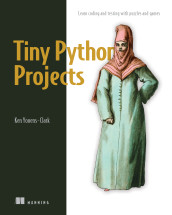
Tiny Python Projects: Learn coding and testing with puzzles and games
None is Python's singleton value representing the absence of a meaningful value.
- How it is used
- Uses None to signal an absent input, missing function result, or intentionally non-returning in-place operation.
- How deep it goes
- Explains None through list mutation, randomization, omitted arguments, and implicit returns, without descending into object internals.
- Examples
- Demonstrates None with list.sort(), random.shuffle(), omitted argparse inputs, and a Tic-Tac-Toe winner search.
- What you can do after
- Diagnose accidental None assignments and interpret None as a deliberate absence signal in command-line programs and functions.
Read how Tiny Python Projects: Learn coding and testing with puzzles and games explains None →
Also covered in
- Grokking Data Structures
- Building LLM Applications with DSPy
- The Well-Grounded Python Developer: How the pros use Python and Flask
What to know first
- functionA function is a callable unit of program code that performs a computation or operation, can accept inputs, and may produce a result or side effect.
- quantitative dataQuantitative data is information represented numerically as quantities, measurements, counts, or other values suitable for numerical interpretation or analysis.
- MapA map is an associative data structure that stores key-value associations and supports retrieving values by key.
- return statementA return statement ends the current function or routine invocation and optionally supplies its result to the caller.
Related concepts
- dict.getproduced by · dict.get is a Python dictionary method that returns the value for a key or a specified default when the key is absent.
- NoneTypekind of · NoneType is the Python type of the singleton value None, which represents the absence of a value.
- return statementproduced by · A return statement ends the current function or routine invocation and optionally supplies its result to the caller.
- default valueconfigured by · A default value is a predefined value automatically applied when no explicit value is supplied or specified.
- functionproduced by · A function is a callable unit of program code that performs a computation or operation, can accept inputs, and may produce a result or side effect.
- similarity searchproduced by · Similarity search is a retrieval technique that finds or ranks items by their similarity to a query, often by comparing feature or vector representations under a similarity or distance measure.
Questions about None
What is None?
None is Python’s singleton object representing the absence of a value or meaningful result.
Which Manning books explain None?
Get Programming: Learn to code with Python, Python How-To, The Quick Python Book, Fourth Edition and Tiny Python Projects: Learn coding and testing with puzzles and games.
What should I know before learning None?
Manning books that teach None usually introduce function, quantitative data, Map and return statement first.
What is None a kind of?
None is a kind of NoneType. NoneType is the Python type of the singleton value None, which represents the absence of a value.
These guides are generated from the text of Manning books by Manning's knowledge graph and link to the sections they draw on. The full books are available on liveBook and at manning.com.