Non-repudiation provides evidence that an entity participated in an action, making a denial difficult to credibly sustain. In digital communications, a digital signature links a document to the sender’s private key. section 14.2.2 section 14.2.5
A sender creates a signature with a private key, and recipients verify it with the matching public key. This supports sender authenticity and shows whether the signed data changed, but does not by itself keep the data confidential. section 14.2.5 section 14.2.2
A digital signature establishes non-repudiation through these steps:
- Hash the document to produce a fixed-length digest. section 14.2.5
- Encrypt the digest with the sender’s confidential private key to create the signature. section 14.2.5
- Transmit or store the document with its signature. section 14.2.5
- Use the sender’s public key to recover the signed digest, hash the received document again, and compare the values. section 14.2.5
Alice signs a document for Bob
If Alice signs a document with her private key, Bob can use Alice’s public key to verify that Alice’s key created the signature and that the document was not altered afterward. Anyone with Alice’s public key can read the document, so Alice must also encrypt it with Bob’s public key when confidentiality is required. section 14.2.2 section 14.2.5
Figure 14.4 Illustration of digital signing and verification of a document
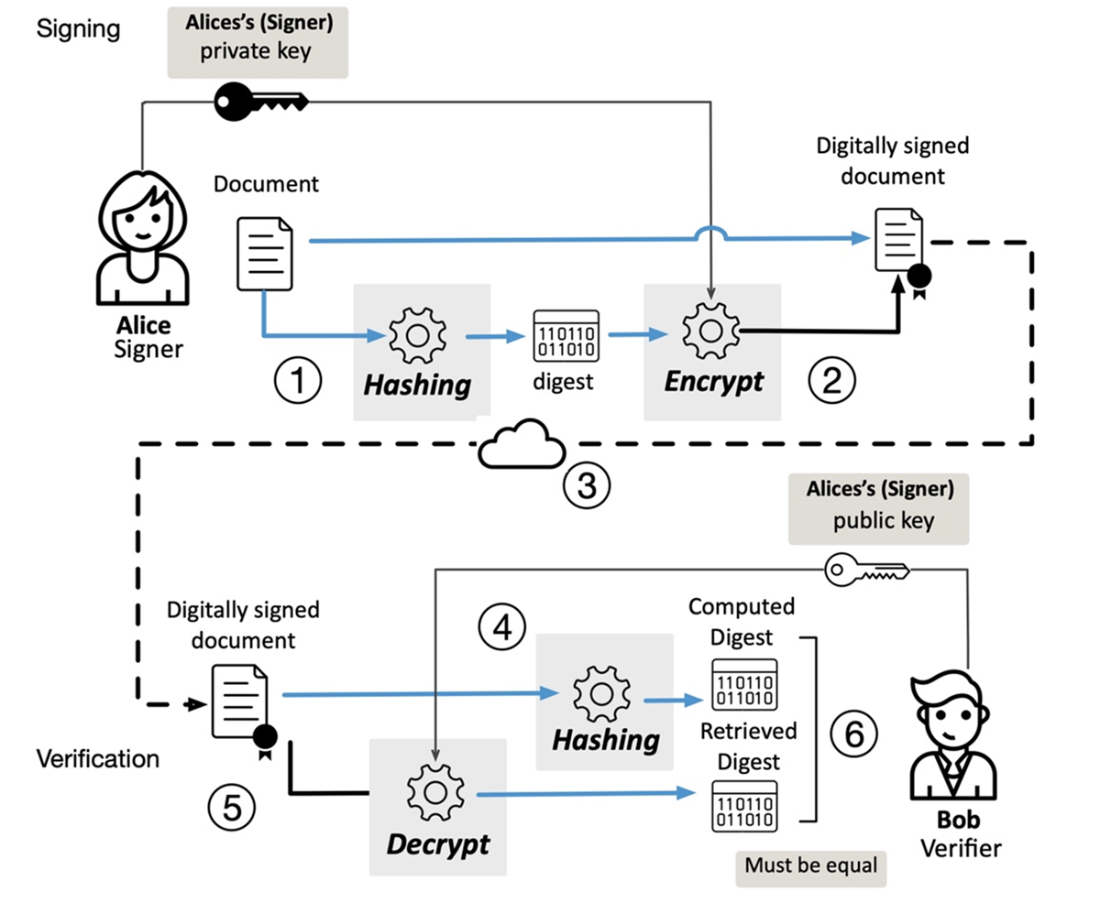
Follow the signing and verification flow from document hashing through signature validation. section 14.2.5





