Notion centralizes scattered LLM prompts and answers in a structured journal. Pages can hold topic-specific research, while tags and properties support filtering and sorting. section 9.2.2 section 9.0
A Python workflow can:
- Create a page in a database using a title property and database identifier. section 9.2.2
- Send page content through REST requests, validate status codes, and retain the returned page ID. section 9.2.2
- Write prompts and answers as paragraph blocks, splitting long text into chunks before submission. section 9.2.2
- Generate repeatable titles containing a ticker, date, prompt identifier, and LLM name. section 9.2.2
Exporting an investment-research response
A workflow creates a page such as INVZ-2024_01_15-prompt42-OPENAI, writes the prompt, appends the answer, and stores the resulting page identifier for later use. section 9.2.2
Figure 9.2 A Notion journal with some reference entries. You can use Notion as a unified storage for all responses from multiple LLMs.
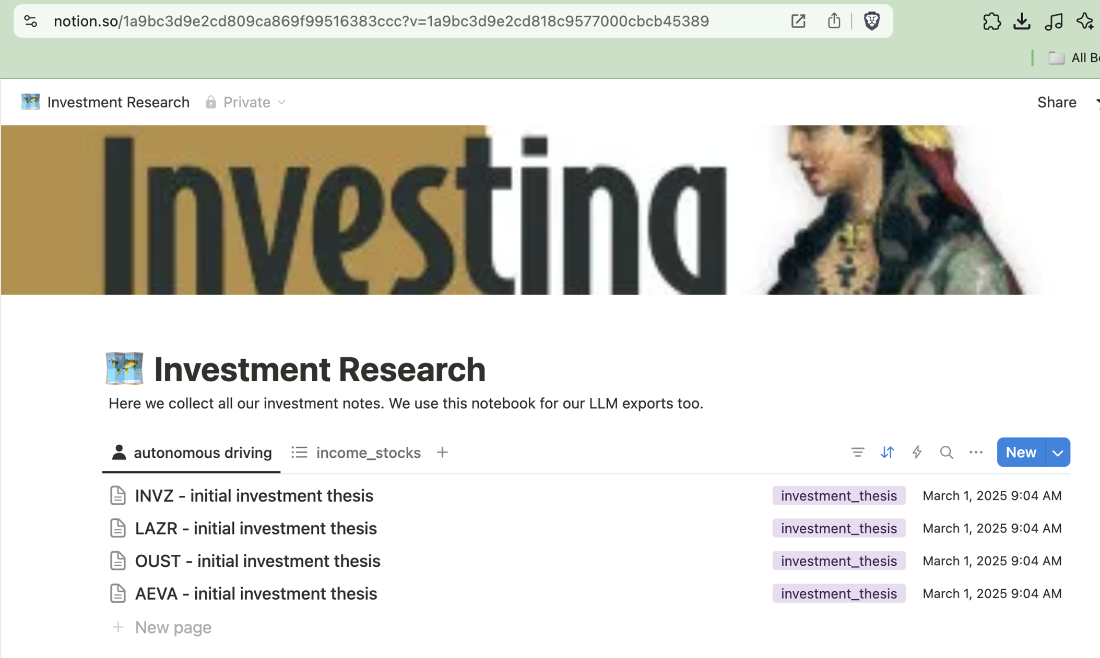
A journal view makes Notion’s role as unified storage visible: reference entries from multiple LLMs remain organized in one searchable workspace. section 9.2.2
