A one-way door is a decision that is difficult, expensive, or disruptive to reverse. It can shape technology and organizational work for years, so it deserves more analysis than a routine choice. The point is not to make every decision slowly: reversible, low-impact choices are often better tried and adjusted. section 1.1.2
Typical one-way doors include:
- Selecting a data storage architecture or changing a key framework. section 1.1.2
- Signing a multi-year SaaS contract or building an internal platform instead of adopting a vendor. section 1.1.2
- Enforcing an architecture standard across the company. section 1.1.2
Start with a reversible test where possible. Try a library in one isolated module before adopting it across the codebase, or run a SaaS trial before committing to a contract. When the larger commitment approaches, clarify the business outcome, compare alternatives and risks, gather evidence, and involve the stakeholders affected. For consequential external technology choices, specific questions to engineers with firsthand experience can add evidence; reserve that ask for decisions that warrant their time. section 1.1.2 section 4.2.2
Figure 1.1 Decisions that require structured analysis sit in the upper quadrants: high cost of change or high organisational impact.
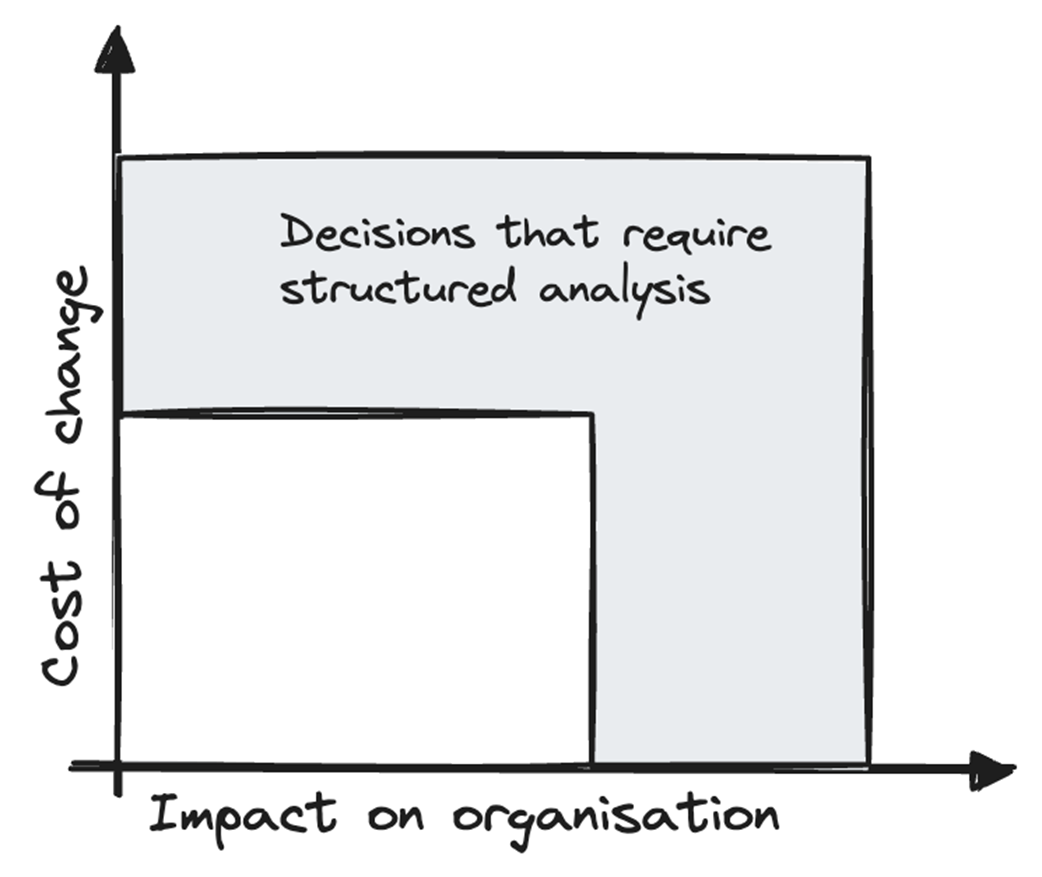
Use the cost-of-change and organizational-impact axes to spot decisions that warrant structured analysis, rather than applying the same process to every choice. section 1.1.2
Care does not eliminate uncertainty or guarantee a favorable result. Judge the decision by whether it deliberately serves a business outcome with known risks considered; revisit it if a prototype exposes a constraint or execution shows that the choice is not sticking. section 1.5