An opinionated default is a preset configuration value that favors recommended secure, functional, or standardized behavior over unrestricted flexibility. Infrastructure modules use embedded defaults so teams can deploy working resources without knowing every underlying option. section 5.4 section 13.1.1
Apply the pattern by:
- Setting prescriptive defaults for common infrastructure use cases. section 5.4
- Exposing only the input variables teams need, rather than every possible attribute. section 13.1.1
- Allowing overrides or module updates when flexibility is necessary, while requiring approval for potentially disruptive changes. section 5.4 section 5.5
- Checking documentation, compatibility tests, security, and lifecycle before adopting an external module or tool. section 13.1.1 section 13.5
Database module
A shared database module pins a tested database version and supplies secure defaults. A team needing PostgreSQL 12 can update the module, but the release waits for infrastructure-team approval before other teams consume it. section 5.4 section 13.1.1
Figure 5.13 An application team can update the database module. However, the team must wait for approval from subject-matter experts before being able to use the new release.
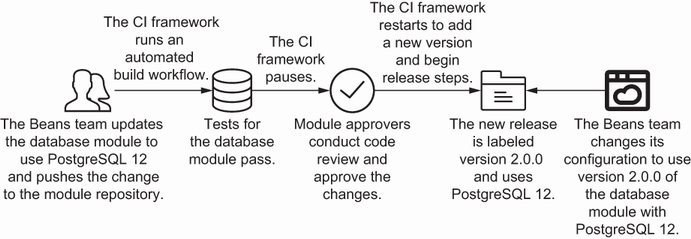
Shows the collaboration path from an application team’s module update to subject-matter approval and release. section 5.4
