Module
A module is a cohesive unit of code or computation that groups related functionality within a larger system and defines a scope or boundary for organizing or sharing it.
Infrastructure as Code, Patterns and Practices: With examples in Python and Terraform
- How it is used
- Builds reproducible, composable infrastructure by grouping resources and sharing standardized configurations across environments and teams.
- How deep it goes
- Explains module boundaries, patterns, dependencies, testing, sharing, and release governance, with implementation examples but no complete provider-specific deployment.
- Examples
- Demonstrates network, subnet, server, database, load-balancer, and tags modules through Python, Terraform JSON, state outputs, repositories, and release workflows.
- What you can do after
- Builds and shares reusable modules, connects them through outputs, tests changes, and releases governed versions.

The Quick Python Book, Fourth Edition
- How it is used
- Organizes reusable Python code and separates names across larger programs and libraries.
- How deep it goes
- Works through module creation, import forms, search paths, reloading, script guards, and package organization.
- Examples
- Uses a circle-area module and refactors text-cleaning and word-count functions into modules and a package.
- What you can do after
- Build modules from scratch, import their functions, and refactor existing code into reusable modules.
Read how The Quick Python Book, Fourth Edition explains module →

Web Components in Action
- How it is used
- Uses modules to let Web Components import dependencies instead of making the page maintain a script tag for every component.
- How deep it goes
- Works through entry files, imports, exports, template separation, and a library wrapper; defers a deeper account of modules.
- Examples
- Builds a harp from imported component files, separates a business-card template, and wraps MIDI.js for sound.
- What you can do after
- Build it from scratch: load one component entry module, import its dependencies, and separate rendering into an importable template.
Terraform in Depth: Infrastructure as Code with Terraform and OpenTofu
An application module is a Terraform module that contains the infrastructure configuration for an application.
- How it is used
- Packages application infrastructure for reuse and deployment across environments.
- How deep it goes
- Explains root-module arrangements, version selection, inputs, outputs, and the resource-graph caveat without detailing an application module’s full implementation.
- Examples
- Contrasts environment tfvars files with staging and production root modules, including a versioned registry call that outputs an application URL.
- What you can do after
- Operate/configure it by choosing a root-module arrangement and setting environment-specific inputs and module versions.
Read how Terraform in Depth: Infrastructure as Code with Terraform and OpenTofu explains module →
The Joy of JavaScript
A module system is a set of rules and mechanisms for organizing code into modules and controlling how they export and import bindings.
- How it is used
- Organizes application code into separately understandable files with explicit dependencies and exposed APIs.
- How deep it goes
- Works through dynamic patterns, ESM syntax, loading behavior, and tooling benefits, but defers loader configuration and build-tool specifics.
- Examples
- Contrasts CommonJS require with ESM import, then uses validation imports, conditional algorithm loading, and a bundler dependency tree.
- What you can do after
- Build it from scratch using ESM imports and exports, and evaluate static versus dynamic loading for an application's dependencies.

CSS in Depth, Second Edition
A module is a reusable, relatively small unit of page structure and styling that is independent of its surrounding page context.
- How it is used
- Organizes page styling into reusable units that can be assembled without tying their selectors to particular page locations.
- How deep it goes
- Develops class-based encapsulation through composition, naming, responsive behavior, and an isolated development workflow; treats dropdown JavaScript only briefly.
- Examples
- Builds a notification, composes a dropdown with a menu, and tests an image-and-text module in a narrow sidebar.
- What you can do after
- Build it from scratch: define focused, reusable CSS modules, compose them into pages, and document new ones in a pattern library.

Python Workout: 50 ten-minute exercises
- How it is used
- Promotes reuse, testing, maintainability, and abstraction when functionality serves multiple programs.
- How deep it goes
- Explains file structure, imports, namespaces, execution guards, packages, and selected implementation trade-offs.
- Examples
- Uses sales-tax and menu modules, import aliases, selective imports, __all__, and direct-execution tests.
- What you can do after
- Build it from scratch, import it into programs, control direct execution, organize packages, and publish them with Poetry.
Read how Python Workout: 50 ten-minute exercises explains module →

Elixir in Action, Third Edition
A module is a named unit of Elixir code that groups functions and other definitions for compilation and loading.
- How it is used
- Organizes small Elixir functions into named units that can be compiled, loaded, called, and assembled into OTP applications.
- How deep it goes
- Explains definition syntax, naming, imports, aliases, compilation, bytecode loading, and runtime lookup without becoming a full language reference.
- Examples
- Uses Geometry, Geometry.Rectangle, IO, iex, .ex source files, and compiled .beam files to demonstrate module organization and invocation.
- What you can do after
- Build it from scratch using defmodule and def, compile it, load it in iex, and call its functions through qualified or aliased names.
Simple Object-Oriented Design: Create clean, maintainable applications
A module is a separately organized application unit containing its own domain model and related components.
- How it is used
- Organizes large business systems into independently evolving components that collaborate through clear contracts.
- How deep it goes
- Develops domain boundaries, interface design, compatibility, extension points, and dependency monitoring without prescribing one architecture.
- Examples
- Uses Billing, Delivery, Inventory, Invoice, caching, registration APIs, and JUnit internal-class coupling as concrete cases.
- What you can do after
- Evaluate/understand module designs by checking domain ownership, API simplicity, client coupling, compatibility, and dependency growth.
Read how Simple Object-Oriented Design: Create clean, maintainable applications explains module →

The Well-Grounded Rubyist, Fourth Edition
A module is a Ruby construct that groups constants, methods, and other definitions under a namespace and can provide reusable behavior.
- How it is used
- Organizes shared object behavior without requiring classes to share a superclass, and keeps nested names separate.
- How deep it goes
- Works through definition, inclusion, lookup, extension, namespaces, and inclusion callbacks, while treating the mechanics of extend only preliminarily.
- Examples
- Uses a greeting mixin, stacklike behavior, temperature conversion, nested class names, and an inclusion callback.
- What you can do after
- Build it from scratch: define reusable Ruby behavior, mix it into classes, and use modules to separate namespaces.
Read how The Well-Grounded Rubyist, Fourth Edition explains module →
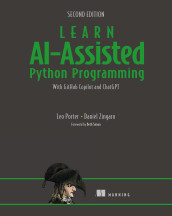
Learn AI-Assisted Python Programming, Second Edition
- How it is used
- Uses modules to extend Python for data processing, visualization, automation, file formats, websites, games, and other specialized tasks.
- How deep it goes
- Defines purpose-specific code collections and demonstrates importing and calling them, without descending into internal implementation.
- Examples
- Uses csv for NFL statistics, zipfile for multiple CSV files, and module tables covering visualization, data processing, and machine learning.
- What you can do after
- Apply modules via Python import statements, identify installation requirements, and use their functions in practical programs.
Read how Learn AI-Assisted Python Programming, Second Edition explains module →
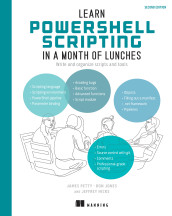
Learn PowerShell Scripting in a Month of Lunches, Second Edition: Write and organize scripts and tools
A PowerShell module is a package that groups commands, functions, variables, and related resources for reuse.
- How it is used
- Packages focused PowerShell functions into reusable, discoverable commands for automation, testing, deployment, and optional publication.
- How deep it goes
- Descends from basic .psm1 creation through loading, reloading, manifests, exports, private helpers, discovery performance, and revision management.
- Examples
- Uses Get-MachineInfo, Set-TMServiceLogon, Get-DiskInfo, MyTools.psm1, database code, and PowerShell Gallery searches.
- What you can do after
- Build it from scratch as a discoverable script module, test its commands, control its public surface, and publish versioned revisions.

Learn Haskell by Example
A Haskell module is a source-code unit that groups related definitions and controls their visibility through imports and exports.
- How it is used
- Organizes related definitions into reusable library and executable units with controlled visibility.
- How deep it goes
- Explains declarations, path-based names, exports, imports, qualification, and re-exports, while deferring deeper compilation details.
- Examples
- Uses Lib and Main, Graph, a line-numbering library, and a Csv re-export module.
- What you can do after
- Build it from scratch by naming files, declaring modules, selecting exports, importing dependencies, and arranging reusable code.

Data-Oriented Programming: Reduce software complexity
A software unit that aggregates stateless functions separately from the data entities those functions manipulate.
- How it is used
- Organizes system functionality into API-facing groups while separating it from data entities.
- How deep it goes
- Defines stateless functions, explicit data arguments, usage-only module relations, and the contrast with implicit object state; defers polymorphism.
- Examples
- Uses a Library module containing search, borrowing, returning, blocking, login, and lending-list functions.
- What you can do after
- Build it from scratch by extracting functionality from requirements, grouping exposed functions, and passing manipulated data explicitly.
Read how Data-Oriented Programming: Reduce software complexity explains module →
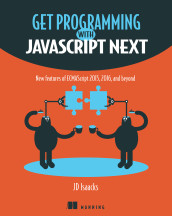
Get Programming with JavaScript Next: New features of ECMAScript 2015, 2016, and beyond
A separate source file or file-level unit that encapsulates code and can be imported or exported as part of a larger program.
- How it is used
- Organizes reusable JavaScript logic into files that share selected values without relying on globals.
- How deep it goes
- Defines file scope, works through default and named exports and imports, and addresses browser bundling without detailing loader internals.
- Examples
- Uses a shared statistics function and separate game-interface files to illustrate private helpers and small module APIs.
- What you can do after
- Build it from scratch by separating logic into files, exporting needed values, importing them, and bundling browser code with Browserify.

Secrets of the JavaScript Ninja, Second Edition
A bounded unit of code used to organize and reuse program functionality.
- How it is used
- Organizes growing JavaScript programs into reusable, loosely coupled clusters while hiding implementation details.
- How deep it goes
- Works from the module pattern through AMD and CommonJS to ES6 export and import forms, with browser-compatibility guidance.
- Examples
- Uses a greeting module to test exported and private identifiers, plus exercises on valid imports and default exports.
- What you can do after
- Build it from scratch with the module pattern, or apply ES6 exports and imports to share selected functionality.
Read how Secrets of the JavaScript Ninja, Second Edition explains module →

Pro Angular 16
A module is a self-contained software unit that groups related functionality and can be incorporated into an application.
- How it is used
- Organizes file dependencies and configures root and optional feature groups in Angular applications.
- How deep it goes
- Works through file-level imports and exports and shows root-module configuration; defers details of decorator properties.
- Examples
- Uses named imports between TypeScript files, an `AppModule` listing, and an administration module that selects Angular Material features.
- What you can do after
- Build it from scratch by exporting and importing file features, then configuring a root or optional feature module.

Refactoring to Rust
Rust's module system organizes related items into modules and controls how code is named, accessed, and structured within crates.
- How it is used
- Organizes crate items by responsibility and provides namespaces for finding and accessing them.
- How deep it goes
- Works through declarations, file layout, nesting, paths, and visibility using incremental refactoring and compiler errors.
- Examples
- Uses a greeting program split into input and output modules and a nested crate example comparing absolute and relative paths.
- What you can do after
- Build modules from scratch, move them into files, and resolve common import and visibility errors.
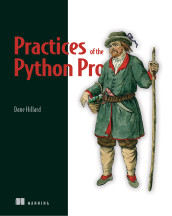
Practices of the Python Pro
- How it is used
- Organizes related code by concern and exposes selected functionality to other modules through imports.
- How deep it goes
- Explains files, namespaces, encapsulation, import forms, and organization, but stops short of package implementation.
- Examples
- Uses state-capital calculations, sales-tax and receipt files, shopping-cart decomposition, and layered application modules.
- What you can do after
- Build it from scratch by dividing code into concern-based .py files and importing required names explicitly.

Get Programming: Learn to code with Python
A separable software component, typically a file, that groups code and provides a limited unit of functionality.
- How it is used
- Uses modules to divide larger programs into manageable tasks that work together.
- How deep it goes
- Defines modules through inputs, tasks, and outputs, then describes independent environments; defers code examples of information passing.
- Examples
- Illustrates modules with a group research project and two Python files sharing class definitions.
- What you can do after
- Apply it via Python imports to use definitions from another file, and practice dividing larger tasks into reusable pieces.
Read how Get Programming: Learn to code with Python explains module →
Essential TypeScript 5, Third Edition
An ECMAScript module is a JavaScript module defined by the ECMAScript module system, with explicit imports and exports.
- How it is used
- Splits an application into files with explicit exported features and imported dependencies.
- How deep it goes
- Works through default and named imports and exports, then addresses Node.js and TypeScript configuration failures.
- Examples
- Uses a tax calculation, product utilities, and a TypeScript sum function with a generated-file import path.
- What you can do after
- Operate/configure ECMAScript modules in Node.js and TypeScript projects, then export and import functions between files.
Read how Essential TypeScript 5, Third Edition explains module →

Rust Servers, Services, and Apps
The Rust module system organizes code into named modules that provide separation and visibility boundaries.
- How it is used
- Organizes web-application functionality into Rust modules, separating handlers, database access, models, and state.
- How deep it goes
- Shows file restructuring, module declarations, imports, and exports through application code.
- Examples
- Uses an initial application module and later splits handlers into authentication and course modules.
- What you can do after
- Build application modules that separate authentication and course handlers, then import and configure their routes.
Clean Applications with Hexagonal Architecture
A module is a cohesive software unit whose implementation and dependencies are organized behind a defined boundary.
- How it is used
- Uses modules to make hexagonal dependency boundaries visible and enforceable before runtime assembly.
- How deep it goes
- Explains module selection and dependency rules, then distinguishes compile-time visibility from runtime wiring and test-time architectural checks.
- Examples
- Uses a parent POM and an application-core POM to organize a domain, ports, adapters, and Spring Boot assembly.
- What you can do after
- Configure Maven modules to protect chosen dependency boundaries and use an assembly module to wire implementations at runtime.
Read how Clean Applications with Hexagonal Architecture explains module →

F# in Action: A Revised Edition of Get Programming with F#
A module is a language construct that groups related declarations such as data types, values, and functions under a named scope.
- How it is used
- Groups related F# declarations and keeps functions separate from the data they operate on.
- How deep it goes
- Explains declarations, qualification, nesting, file boundaries, and script defaults, but does not develop compiler internals.
- Examples
- Demonstrates nested arithmetic functions and a retail basket updated by functions outside its record.
- What you can do after
- Build it from scratch by grouping types and functions into modules, then adding namespaces when separate files need a shared parent.
Read how F# in Action: A Revised Edition of Get Programming with F# explains module →
JavaScript in Depth
A single JavaScript file treated as a unit of code that can be loaded and share code with other modules.
- How it is used
- Uses module loading to explain why the same JavaScript file can produce different behavior across runtimes.
- How deep it goes
- Defines modules and compares runtime behavior with a concrete puzzle, without detailing module-system internals.
- Examples
- Compares an asynchronous-task puzzle across Node.js, Deno, Bun, Chrome, and Cloudflare Workers.
- What you can do after
- Diagnose runtime-dependent behavior by checking the module system, runtime, version, and file extension.
Julia as a Second Language
A module is a Julia namespace that groups related functions, types, constants, and other definitions.
- How it is used
- Organizes related Julia definitions into namespaces and packages for reuse without name collisions.
- How deep it goes
- Explains module definitions, package relationships, included files, and imported function extension through worked examples.
- Examples
- Uses cylinder and cone volume functions, Statistics REPL commands, and a geometry package split across source files.
- What you can do after
- Build a Julia module from scratch and organize its definitions across included files.
Systems Programming with Zig
A module is a source-code unit that groups related declarations and functionality within a program.
- How it is used
- Organizes Zig code and separates dependencies so components can be built and tested independently.
- How deep it goes
- Defines modules and imports, then demonstrates module creation, dependency wiring, and test build steps.
- Examples
- Uses a standard-library print program and a CHIP-8 interpreter with separate VM, runtime, and test modules.
- What you can do after
- Configure Zig build modules, connect imports, and create a test step.

D3.js in Action, Third Edition
The JavaScript module system provides import and export declarations for sharing bindings between separately scoped source modules.
- How it is used
- Organizes D3 projects around imported libraries, allowing use of the full library or only selected parts.
- How deep it goes
- Connects imports to project setup and smaller files, but stops short of explaining import and export syntax.
- Examples
- Uses full-versus-individual D3 imports and a Parcel project setup as examples.
- What you can do after
- Apply it via NPM and Parcel to import selected D3 modules and prepare browser-readable project files.

Learn PowerShell in a Month of Lunches: Fourth Edition, Covers Windows, Linux, and macOS
A module is a packaged unit of reusable code and related resources that can be loaded into a software environment.
- How it is used
- Extends PowerShell with reusable command sets for Azure and other PowerShell-enabled products.
- How deep it goes
- Defines modules, distinguishes them from snap-ins, and demonstrates discovery, installation, verification, and command lookup without covering implementation internals.
- Examples
- Uses the Az module, PowerShell Gallery searches, YAML conversion commands, and module inventory exercises.
- What you can do after
- Operate/configure modules by finding, reviewing, installing, verifying, and querying their commands.

Functional Design and Architecture: Examples in Haskell
A software module is a separately organized unit of code with a defined responsibility and boundary.
- How it is used
- Organizes code around encapsulated responsibilities and keeps domain, implementation, and asset dependencies separated.
- How deep it goes
- Descends from opaque types and smart constructors to export lists, reexports, project structure, and corrected cross-layer dependencies.
- Examples
- Uses an opaque Value type, smart constructor functions, an Andromeda project tree, and vendor-dependent versus corrected hardware modules.
- What you can do after
- Evaluate/understand module boundaries, hide representations, design export lists, and detect dependencies that mix implementation with assets.
Read how Functional Design and Architecture: Examples in Haskell explains module →

Testing Spring Boot Applications
An application module is a bounded, cohesive structural unit of an application that groups related components around a business or technical boundary and exposes a defined interface to other modules.
- How it is used
- Organizes cohesive application features around business or technical boundaries and scopes vertical tests to one module.
- How deep it goes
- Defines package boundaries, visibility rules, dependency verification, and module-scoped tests, but leaves event-based and runtime features unexplored.
- Examples
- Uses City, Weather, and Preferences modules, plus a Weather test that stubs the CityService dependency.
- What you can do after
- Apply it via Spring Modulith to verify module boundaries and run tests scoped to a single module.

Learn Rust in a Month of Lunches
- How it is used
- Organizes Rust code into named spaces, clarifies paths, and controls which items users can access.
- How deep it goes
- Explains module scope, privacy, visibility, nesting, and paths, but does not detail all differences in making items public.
- Examples
- Uses a print_things module and nested country, province, and city modules to demonstrate visibility and paths.
- What you can do after
- Apply Rust's mod and pub keywords to organize functions and control access.
Deep Learning with PyTorch, Second Edition
A reusable network substructure made of a sequence of layers.
- How it is used
- Organizes convolutional network backbones into repeated sequences of convolutions, activations, and pooling.
- How deep it goes
- Defines a block and demonstrates its forward pass, stopping short of general module-system coverage.
- Examples
- Uses LunaBlock with two 3 × 3 Conv3d layers, ReLU activations, and MaxPool3d.
- What you can do after
- Build it from scratch by defining a reusable convolutional block with initialization and forward-processing logic.
Read how Deep Learning with PyTorch, Second Edition explains module →
Web Component Development with Modern Libraries and Tooling
A JavaScript module with its own scope that shares code through explicit import and export bindings.
- How it is used
- Organizes JavaScript code into files that share definitions through imports and exports.
- How deep it goes
- Explains file scope, loading, execution, strict mode, and cross-origin restrictions.
- Examples
- Uses a module script to include web component code and recommends testing through a local HTTP server.
- What you can do after
- Configure module scripts for web component code and use Vite for local development.
Read how Web Component Development with Modern Libraries and Tooling explains module →

The Well-Grounded Python Developer: How the pros use Python and Flask
A Python module organized for reuse by applications or other code.
- How it is used
- Organizes reusable functionality into namespaces and separates application domains for maintainable larger applications.
- How deep it goes
- Explains modular boundaries, namespaces, and application roles without detailing module creation syntax or import mechanics.
- Examples
- Uses a MyBlog application, URL endpoint modules, Flask Blueprints, and Python standard library modules as examples.
- What you can do after
- Build larger applications by separating related functionality into focused modules and namespaces.
Read how The Well-Grounded Python Developer: How the pros use Python and Flask explains module →

Deep Learning with Python, Third Edition
A repeated architectural unit in the Transformer made from attention and feedforward sublayers.
- How it is used
- Organizes Transformer computation into repeated blocks that combine attention with feedforward processing.
- How deep it goes
- Defines modules through architectural repetition and identifies Transformer block composition, but does not detail sublayer implementation.
- Examples
- Uses stacked Transformer blocks and repeated ConvNet blocks, including Xception’s repeated convolution and pooling pattern.
- What you can do after
- Evaluate/understand architecture diagrams by identifying reusable blocks and their attention and feedforward roles.
Read how Deep Learning with Python, Third Edition explains module →

Rust in Action: Systems programming concepts and techniques
A module is a Rust language construct that groups related declarations and organizes a crate's source code.
- How it is used
- Organizes a crate’s source code by grouping related declarations and keeping tests alongside implementation.
- How deep it goes
- Defines file and inline modules, nesting, default privacy, visibility modifiers, and imports; stops short of extensive module-system use.
- Examples
- Uses a Q7 implementation, a nested tests module, use super::*, and cargo test output.
- What you can do after
- Apply Rust module syntax to split declarations, control visibility, and import items within a crate.
Read how Rust in Action: Systems programming concepts and techniques explains module →

Kotlin in Action, 2E
A module is a distinct unit of Kotlin compilation whose declarations share an internal visibility boundary.
- How it is used
- Uses compilation boundaries to hide implementation details while exposing selected Kotlin APIs.
- How deep it goes
- Defines modules and internal visibility, then contrasts them with file, class, package, and public boundaries.
- Examples
- Uses Gradle source sets, Maven projects, IntelliJ IDEA modules, and test access to main-source internal declarations.
- What you can do after
- Operate/configure module boundaries and choose internal visibility for implementation details.

Acing the Frontend Interview
An ES module is the standardized JavaScript module format that provides file-level scope and explicit import and export declarations.
- How it is used
- Organizes and shares JavaScript code across files through explicit imports and exports.
- How deep it goes
- Defines module scope, syntax, and benefits, then situates ES modules among older formats.
- Examples
- Uses import and export declarations as the concrete syntax and contrasts legacy module formats.
- What you can do after
- Apply ES modules to organize reusable JavaScript across files with explicit imports and exports.

Vibe Engineering
A module is a bounded software code unit that groups related declarations and can serve as an independently managed architectural component.
- How it is used
- Improves build throughput, agent parallelism, code navigation, and change isolation in large codebases.
- How deep it goes
- Explains modules through compilation units, cache keys, rebuild scope, and I/O contention, but does not detail interface design.
- Examples
- Uses self-contained crates, JVM modules, workspace packages, and a seven-module split of a 45,000-line service.
- What you can do after
- Evaluate module boundaries by measuring rebuild scope, cache contention, build time, and concurrent-agent interference.
Tiny Python Projects: Learn coding and testing with puzzles and games
- How it is used
- Uses Python files to share reusable functions across programs and to separate importable functionality from command-line execution.
- How deep it goes
- Explains importing, qualified names, and the __name__ guard, but stops short of module packaging or advanced import mechanics.
- Examples
- Demonstrates importing and calling stemmer() from rhymer.py in the REPL.
- What you can do after
- Apply modules by importing reusable functions and preventing command-line startup during imports.
Read how Tiny Python Projects: Learn coding and testing with puzzles and games explains module →
Code Like a Pro in Rust
- How it is used
- Organizes Rust code into hierarchical scopes, separates functionality across files, and controls which names are visible.
- How deep it goes
- Explains declarations, nesting, file inclusion, naming, and visibility boundaries, including crate-level access.
- Examples
- Uses inline and file-based declarations, nested modules, a Cargo file tree, and a grouped `serde` import.
- What you can do after
- Build it from scratch by grouping Rust code into nested modules, splitting files, and exposing selected items.

Effective Platform Engineering
A Terraform module is a reusable package of Terraform configuration that groups resources and exposes configurable inputs and outputs.
- How it is used
- Uses reusable Terraform modules as targets for integration tests that verify provisioned resources, configuration, and acceptance criteria.
- How deep it goes
- Explains module testing through dedicated-account applies and configuration checks, but does not detail module construction.
- Examples
- Uses an AWS VPC module to configure managed-node subnet tags for Karpenter discovery and naming conventions.
- What you can do after
- Evaluate a reusable module by applying it in a dedicated cloud account or project and checking its resources and configuration.
Vanilla Web
A module is a self-contained unit of code that encapsulates declarations and can expose selected bindings to other code.
- How it is used
- Uses one documented entry module to register a web component before publication.
- How deep it goes
- Recommends a single documented entry module but does not explain module syntax or loading.
- Examples
- Requires a plain HTML usage example as a distribution artifact.
- What you can do after
- Configure a web component package to register its element from one documented entry module.
Also covered in
- Practical Automation with PowerShell: Effective scripting from the console to the cloud
- Python Workout, Second Edition
- A Pythonic Adventure: From Python basics to a working web app
- Rust Web Development
- React Hooks in Action: With Suspense and Concurrent Mode
- Deep Learning with JAX
- Fast by DefaultIn early access (MEAP)
- Type-Driven Development with Idris
- Deep Learning with R, Third Edition
- Modern Angular
- BDD in Action, Second Edition
- Grokking Software ArchitectureIn early access (MEAP)
What to know first
- functionA function is a callable unit of program code that performs a computation or operation, can accept inputs, and may produce a result or side effect.
- packageA software package is a named unit that groups related software components, either for organization and compilation or for distribution and reuse.
- PythonPython is a high-level, general-purpose, dynamically typed programming language with readable syntax and support for multiple programming paradigms.
- classA class is a programming-language construct that defines a type’s structure and behavior and provides a basis for creating or representing objects.
Related concepts
- functionhas part · A function is a callable unit of program code that performs a computation or operation, can accept inputs, and may produce a result or side effect.
- packagepart of · A software package is a named unit that groups related software components, either for organization and compilation or for distribution and reuse.
- submoduleincludes · A submodule is a module nested within another module or package and organized as part of its containing hierarchy.
- file descriptorkind of · A file descriptor is an operating-system identifier for an open file, socket, pipe, or other input-output resource.
- architectural rulecontrasts with · An architectural rule is a constraint or guiding requirement governing the permitted structure, dependencies, or interactions of a software system.
- composition rootincludes · A composition root is the designated application location where components are constructed and their dependencies are wired into an object graph.
Questions about module
What is module?
A module is a cohesive unit of code or computation that groups related functionality within a larger system and defines a scope or boundary for organizing or sharing it.
Which Manning books explain module?
Infrastructure as Code, Patterns and Practices: With examples in Python and Terraform, The Quick Python Book, Fourth Edition, Web Components in Action, Terraform in Depth: Infrastructure as Code with Terraform and OpenTofu, The Joy of JavaScript, CSS in Depth, Second Edition, Python Workout: 50 ten-minute exercises, Elixir in Action, Third Edition and 36 more.
What should I know before learning module?
Manning books that teach module usually introduce function, package, Python and class first.
What is the difference between module and architectural rule?
A module is a cohesive unit of code or computation that groups related functionality within a larger system and defines a scope or boundary for organizing or sharing it. An architectural rule is a constraint or guiding requirement governing the permitted structure, dependencies, or interactions of a software system.
What kinds of module are there?
Kinds of module include submodule and composition root.
What is module a kind of?
Module is a kind of file descriptor. A file descriptor is an operating-system identifier for an open file, socket, pipe, or other input-output resource.
These guides are generated from the text of Manning books by Manning's knowledge graph and link to the sections they draw on. The full books are available on liveBook and at manning.com.