Optimistic concurrency control lets writers proceed without distributed locks, then validates a proposed table update during an atomic commit. A writer publishes a new snapshot only if the table metadata remains unchanged; otherwise, the commit fails. section 6.3.2 section 7.1.1
Disjoint writes, such as appends to different partitions, can succeed concurrently. Overlapping overwrites can conflict, requiring retries, backoff, and sometimes reevaluation against the latest table state. Frequent commits also accumulate snapshots and manifests, making metadata pruning, compaction, or batching operationally important. section 6.3.2
Figure 7.3 Optimistic commits allow engines to write data and metadata and then determine whether the commit is successful by checking its place in the commit sequence in the metadata before and after writing files and committing. If the projected sequence number changes between the two checks, another transaction has occurred and this one should be retried.
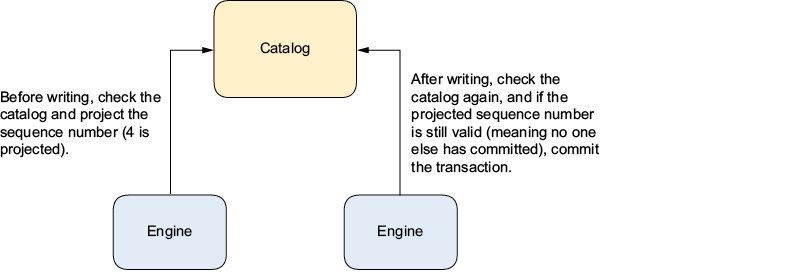
The commit sequence illustrates how an engine writes data and metadata, checks the expected sequence, and retries when another transaction changes the table first. section 7.1.1


