PandaOmics is a computational drug-discovery platform for identifying biological targets by combining omics measurements, genetic associations, and scientific-literature evidence. section 13.3.1
A typical target-discovery workflow combines:
- Differential expression analysis compares patient and control samples. section 13.3.1
- Pathway enrichment highlights biological processes associated with dysregulated genes. section 13.3.1
- Network analysis prioritizes hub genes, while literature mining adds reported gene–disease relationships. section 13.3.1
- Novelty scoring balances biological rationale against prior investment and patent coverage. section 13.3.1
Rentosertib target discovery
For idiopathic pulmonary fibrosis, PandaOmics integrated patient lung transcriptomics, bronchoalveolar lavage proteomics, pulmonary-fibrosis GWAS data, and literature mined from more than 30 million publications. TNIK emerged as a promising target because evidence was substantial while publications and selective inhibitors were scarce. section 13.3.1
Figure 13.7 The four stages of the rentosertib program. Multi-omics data and literature flow through PandaOmics to a scored target list; Chemistry42 generates and optimizes candidates against a multi-objective reward; experimental readouts feed back to refine the models; clinical development follows. Sections 13.3.1 through 13.3.4 walk through each stage.
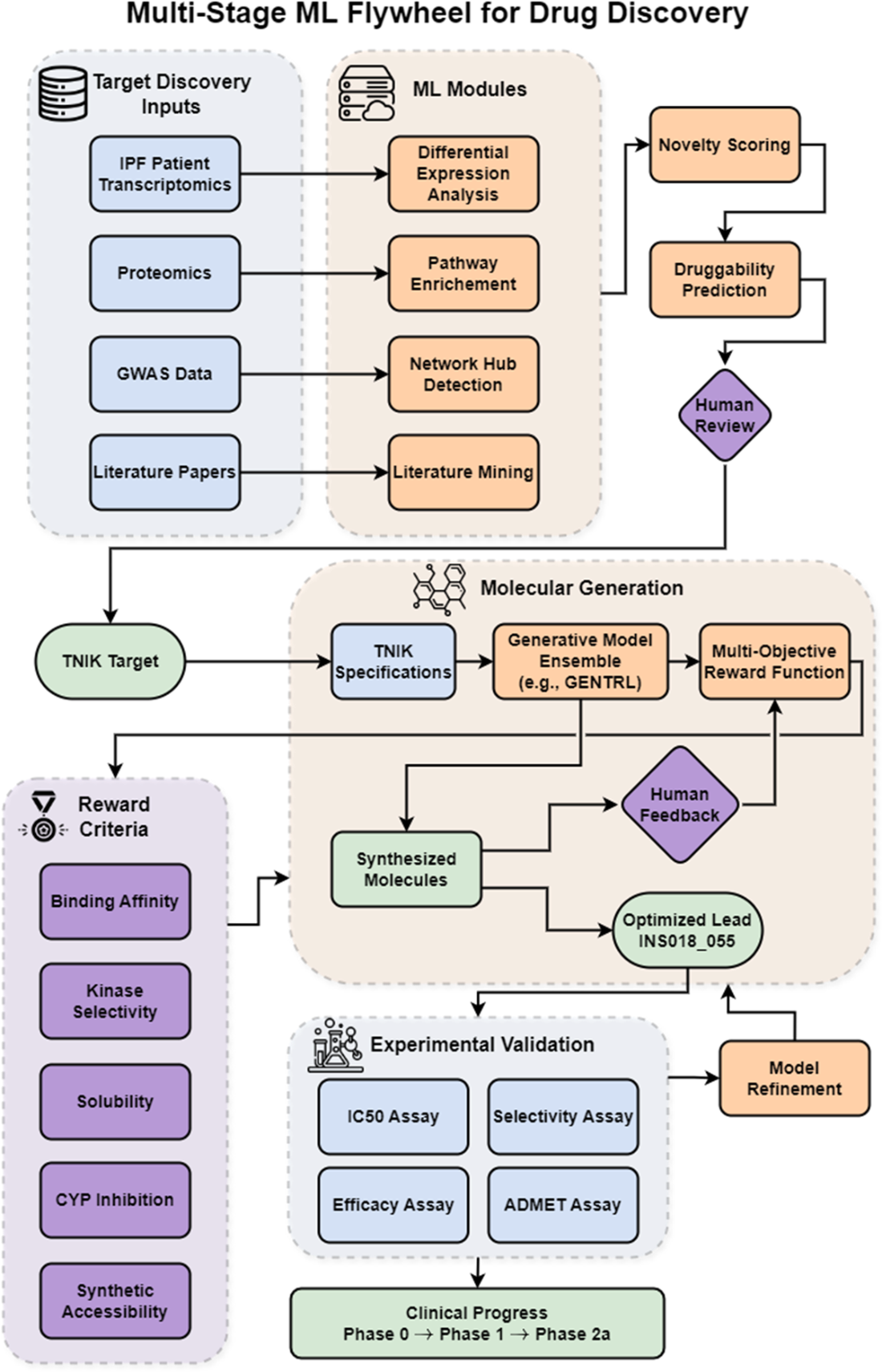
The systems-flow diagram shows how PandaOmics produces a scored target list before molecule generation, experimental feedback, and clinical development. section 13.3.1
