A parameterized query separates a CQL statement’s fixed structure from the values supplied for each execution. Prepare the statement once; the driver caches its parsed form, then bind values to its ? placeholders when running it again. This avoids repeated parsing and sanitizes supplied inputs, preventing CQL injection. section 10.3.1 section 10.7
Use parameterized queries as a small repeatable workflow:
- Write CQL with ? for every value that will vary. section 10.3.1 section 10.4.2
- Prepare it through the database session and retain the resulting statement under a descriptive key. section 10.3.2 section 10.4.2
- Bind application values with the database types the query expects, then execute the statement. section 10.3.2
- Set a default consistency level on the prepared statement when all uses share it; bind first to override one execution. section 10.5.1
Read one article by ID
Prepare SELECT id, author_id, date, restaurant_name, review, score, title FROM articles WHERE id = ?. A Flask route receives the ID, converts it to a UUID, and executes the stored statement with that UUID in a one-item list. The result is then adapted for the API response, including date serialization. section 10.3.2
Writes use the same mechanism. An article insert and its summary-table inserts each have a prepared statement, with one placeholder per inserted value. Preparing the database operation is straightforward; validating request data, retrieving related data, and organizing batch writes add most of the surrounding work. section 10.4 section 10.4.2
Figure 10.3 Using prepared statements in your application lets you reuse queries across requests, binding parameters for each use.
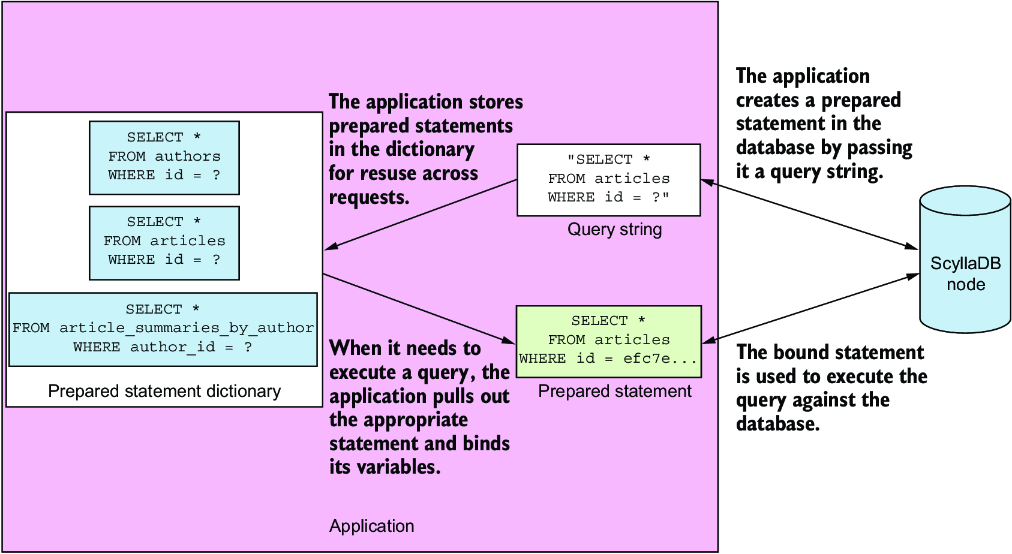
Trace how one prepared query is reused across requests while each execution receives separately bound values. section 10.3.1







