SQL
SQL is a standardized declarative language for defining, querying, and manipulating data and structures in relational database systems.
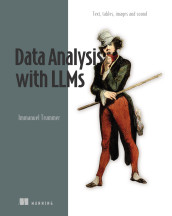
Data Analysis with LLMs
SQL is a standardized language for defining, querying, and manipulating data in relational database systems.
- How it is used
- Turns questions about relational tables into executable analysis queries, often through natural-language-to-SQL translation.
- How deep it goes
- Explains SELECT, FROM, and WHERE with worked queries and a translation workflow; stops short of a full SQL introduction.
- Examples
- Uses game counts, release-year filters, sales aggregates, a reusable prompt, and a SQLite check of generated SQL.
- What you can do after
- Build it from scratch: prompt a language model for a games-database query, inspect the SQL, and execute it in SQLite.
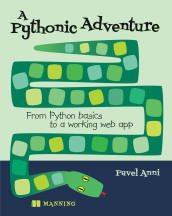
A Pythonic Adventure: From Python basics to a working web app
SQL is a standardized language for defining, querying, and manipulating data in relational databases.
- How it is used
- Supports storing, retrieving, searching, and summarizing order data in a database.
- How deep it goes
- Introduces SQL by name and demonstrates CREATE TABLE, INSERT, and SELECT without teaching SQL as a language.
- Examples
- Uses café orders with customer, drink, flavor, and topping fields, then renders saved rows in an HTML table.
- What you can do after
- Apply it via Python sqlite3 to save submitted orders and retrieve rows from an SQLite database.
Read how A Pythonic Adventure: From Python basics to a working web app explains SQL →

Effective Data Analysis
A SQL query is a statement written in SQL that retrieves, filters, combines, or modifies data in a database.
- How it is used
- Uses SQL to retrieve and manipulate warehouse data for analysis and to define shared data structures.
- How deep it goes
- Explains warehouse objects and a grouped aggregation, then describes SQL-defined tables and dbt models without providing a full syntax guide.
- Examples
- Compares population-by-state aggregation in SQL, R, and Python and asks how to document queries for a promotion analysis.
- What you can do after
- Apply it via SQL queries to access and aggregate warehouse data, and document those queries for reproducible analysis.
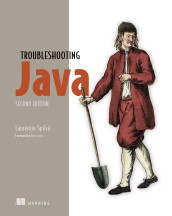
Troubleshooting Java, Second Edition
An SQL query is a statement expressed in Structured Query Language that requests or modifies data in a database system.
- How it is used
- Uses SQL queries as observable evidence for diagnosing database-related application performance problems.
- How deep it goes
- Explains direct and framework-generated queries, profiler interception, stack traces, execution counts, and logging, but defers query optimization details.
- Examples
- Uses product and purchase tables, a purchased-products endpoint, native SELECT statements, generated Hibernate SQL, and execution logs.
- What you can do after
- Diagnose database performance by capturing SQL with a profiler, tracing its caller, counting executions, and examining it in a SQL client.
Read how Troubleshooting Java, Second Edition explains SQL →
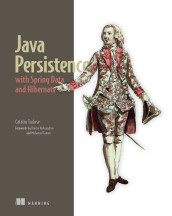
Java Persistence with Spring Data and Hibernate epub
SQL is a standardized language for defining, manipulating, querying, and controlling data in relational database systems.
- How it is used
- Supports relational persistence in Java while remaining necessary for schema work, custom queries, and performance tuning.
- How deep it goes
- Reviews SQL statement roles and shows parameterized repository queries, but defers execution and optimization internals.
- Examples
- Uses repository methods with SELECT COUNT(*) and SELECT * queries bound to named activity and level parameters.
- What you can do after
- Apply it via Spring Data JDBC @Query methods with named parameters, while anticipating vendor-specific query rewrites.
Read how Java Persistence with Spring Data and Hibernate epub explains SQL →
AI Agents and Applications
An SQL query is a statement written in SQL that specifies data to retrieve or filter from a relational database.
- How it is used
- Bridges natural-language questions and structured retrieval from relational databases in an LLM application.
- How deep it goes
- Works through query generation, joins, formatting errors, and cleanup, but does not establish that generated SQL is always correct.
- Examples
- Uses a Cardiff accommodation-offer query, a state-table schema with sample rows, and first-name filters using equality and LIKE.
- What you can do after
- Apply it via LangChain’s create_sql_query_chain and a cleanup chain to produce SQLite-ready statements from natural-language questions.

Build Python Web Apps with Streamlit
A search query is a textual request specifying the items or information to retrieve from a search service.
- How it is used
- Supports persistent relational storage, CRUD operations, and efficient data retrieval for Streamlit applications and BigQuery dashboards.
- How deep it goes
- Explains tables, schemas, data types, keys, CRUD statements, filtering, and execution, but stops short of advanced SQL.
- Examples
- Uses users and haikus tables, Alice’s records, filtered fox-text searches, updates, deletions, and BigQuery sales data.
- What you can do after
- Apply SQL via psql to create tables, insert records, query filtered data, update rows, delete records, and inspect results.
Read how Build Python Web Apps with Streamlit explains SQL →

Building Web APIs with ASP.NET Core
SQL is a standardized language for defining, querying, manipulating, and controlling data in relational database systems.
- How it is used
- Frames relational database selection and supports CRUD interaction for the board-game web API.
- How deep it goes
- Defines tables, schemas, keys, and CRUD query roles, while deferring direct SQL practice to EF Core and LINQ.
- Examples
- Uses board-game tables, CSV imports, schema diagrams, and INSERT, SELECT, UPDATE, and DELETE operations.
- What you can do after
- Apply it via EF Core and LINQ to implement CRUD interactions between a web API and a relational DBMS.
Pro ASP.NET Core 7, Tenth Edition
SQL is a standardized language for defining, querying, manipulating, and managing data in relational databases.
- How it is used
- Carries Entity Framework Core lookups and inserts between ASP.NET Core application code and the database.
- How deep it goes
- Shows translated SELECT and INSERT commands and their logs, but does not teach SQL syntax from scratch.
- Examples
- Uses a calculation endpoint’s SELECT and INSERT logs and a Blazor component that issues duplicate SELECT commands.
- What you can do after
- Diagnose/debug with it by inspecting generated SQL logs for inefficient lookups or queries repeated during rendering.
Software Testing with Generative AI
A request for information or matching items from a data collection or information-retrieval system.
- How it is used
- Drives retrieval of relevant testing context before generating LLM-supported test ideas.
- How deep it goes
- Explains input, relevance matching, document insertion, and context-window rationale, but not similarity-algorithm internals.
- Examples
- Uses deleting-bookings and PUT-branding testing requests, retrieved user stories, acceptance criteria, and a JSON payload schema.
- What you can do after
- Apply it via RAG to retrieve focused testing context and request more accurate, risk-oriented LLM suggestions.

The Well-Grounded Python Developer: How the pros use Python and Flask
SQL is a language for defining, querying, updating, and otherwise interacting with data in relational database management systems.
- How it is used
- Provides declarative access to relational data for retrieval, reporting, application handlers, and schema maintenance.
- How deep it goes
- Explains selection, sorting, aggregation, aliases, joins, grouping, filtering, and application query workflows.
- Examples
- Uses customer listings, sorted names, customer counts, multi-table order reports, blog searches, and post updates.
- What you can do after
- Apply it via database libraries to retrieve, combine, summarize, filter, and maintain relational application data.
Read how The Well-Grounded Python Developer: How the pros use Python and Flask explains SQL →
Machine Learning for Tabular Data: XGBoost, Deep Learning, and AI
SQL is a standardized language for querying and manipulating data in relational databases.
- How it is used
- Supports assembling relational data into tables for analysis or machine-learning workflows.
- How deep it goes
- Explains joins, query sequences, and temporary tables, but does not develop SQL syntax beyond a practical multi-table example.
- Examples
- Uses three product tables joined by product identifiers to assemble descriptions, categories, manufacturers, and weights.
- What you can do after
- Apply it to combine relational tables and produce a final dataset for download or model input.
Read how Machine Learning for Tabular Data: XGBoost, Deep Learning, and AI explains SQL →
Snowflake Data Engineering
SQL is a declarative language for defining, querying, and manipulating data in relational database systems.
- How it is used
- Builds the transformation and automation stages of a Snowflake file-ingestion pipeline with SQL statements and scheduled tasks.
- How deep it goes
- Progresses from staging and loading through merging, transformation, and task automation, while deferring security, governance, software engineering, and DataOps.
- Examples
- Uses a bakery's daily CSV orders, staging and target tables, merges, transformations, and scheduled pipeline execution.
- What you can do after
- Builds and automates a daily Snowflake pipeline that stages CSV files, loads and merges data, transforms it, and schedules SQL execution.
100 SQL Server Mistakes and How to Avoid Them
SQL is a declarative language for querying and managing relational data.
- How it is used
- Uses declarative queries to retrieve and format relational data through SQL Server.
- How deep it goes
- Traces parsing, name resolution, query-tree creation, and optimization, while stopping short of detailed optimizer internals.
- Examples
- Uses a parameterized product SELECT with CASE-based stock messages and a NOLOCK caution.
- What you can do after
- Evaluate/understand how SQL Server transforms a declarative query into an execution plan.
Read how 100 SQL Server Mistakes and How to Avoid Them explains SQL →

Spring Security in Action, Second Edition
A database query is a structured request to retrieve or modify data in a database.
- How it is used
- Uses queries to enforce repository-level filtering while retrieving application data.
- How deep it goes
- Explains postfiltering risks and demonstrates an authorization-aware query, stopping short of broader query design.
- Examples
- Uses a Product entity, MySQL table, repository method, REST endpoint, curl requests, and owner-filtered JSON results.
- What you can do after
- Builds repository queries that retrieve only records matching both search criteria and the authenticated user.
Read how Spring Security in Action, Second Edition explains SQL →

Django in Action
SQL is a declarative language for defining, querying, and modifying data in relational databases.
- How it is used
- Connects web-application code to relational tables through definitions, queries, and database scripts.
- How deep it goes
- Defines tables, rows, keys, and relationships, then stops short of detailed SQL syntax by emphasizing Django ORM abstraction.
- Examples
- Uses band, song, and musician tables, plus a person-role design, to illustrate relationships, schema changes, and query performance.
- What you can do after
- Evaluate/understand how Django models map to tables and how schema choices affect generated SQL and query performance.
Kubernetes for Developers
An SQL query is a declarative statement that requests or manipulates data in a relational database.
- How it is used
- Uses SQL queries to retrieve application data while supporting scalable relational-database access.
- How deep it goes
- Explains query logging, EXPLAIN, indexes, JOIN reduction, and N+1 avoidance, without detailing SQL syntax.
- Examples
- Uses query logs, EXPLAIN analysis, indexed columns, reduced JOINs, and object-list requests as concrete performance examples.
- What you can do after
- Diagnose/debug with query logs and EXPLAIN, then improve performance through indexes, fewer JOINs, and reduced query counts.

Rust Servers, Services, and Apps
SQL is a declarative language for defining, querying, modifying, and controlling data in relational databases.
- How it is used
- Uses SQL to define a PostgreSQL table, seed it, and verify database connectivity through a Rust program.
- How deep it goes
- Builds from database creation and table definition to seeded rows and a parameterized sqlx query, without developing broader SQL operations.
- Examples
- Demonstrates creating and seeding a course table, then selecting its records in psql and Rust.
- What you can do after
- Apply SQL through sqlx to query PostgreSQL and display returned course rows in a terminal.
Learn PowerShell Scripting in a Month of Lunches, Second Edition: Write and organize scripts and tools
A query is a specification of database operations or data selection expressed for execution by a database system.
- How it is used
- Uses queries to select precise management objects and execute repeatable SQL operations from PowerShell automation.
- How deep it goes
- Explains query construction, execution, output checking, and troubleshooting, but defers broader SQL semantics and optimization.
- Examples
- Demonstrates a BITS service query and a conditional disk-information table-creation query.
- What you can do after
- Apply it via PowerShell commands to target objects, run SQL, and diagnose failures through returned values, errors, and displayed query text.
Apache Kafka in Action
An SQL query is a declarative statement that specifies data to retrieve, transform, or aggregate.
- How it is used
- Expresses retrieval, transformation, and aggregation for relational data or continuously changing event streams.
- How deep it goes
- Contrasts database and streaming semantics and demonstrates filtering and aggregation, but defers general SQL and Flink SQL syntax.
- Examples
- Uses a Kafka-backed product-price table, a price filter, and a per-product price-change count.
- What you can do after
- Apply it via Flink SQL to define Kafka-backed tables, filter events, and aggregate changes.

Deep Learning with R, Third Edition
A query is the representation whose information need determines which keys receive high attention relevance.
- How it is used
- Uses the query to select relevant information from source sequences during attention-based prediction.
- How deep it goes
- Defines queries through lookup terminology and implements their projections, dot products, softmax scores, and value aggregation.
- Examples
- Uses photo search, target-source sequence attention, and R-style dot-product and parameterized attention listings.
- What you can do after
- Apply it via dot-product or parameterized attention to retrieve and combine context from source sequences.

Machine Learning System Design
A request containing terms or criteria submitted to a search engine to retrieve relevant information.
- How it is used
- Frames search queries as production inputs whose representation, cleanliness, and monitoring shape search-system reliability.
- How deep it goes
- Explains dataset safeguards, filtering tradeoffs, monitoring targets, and deterministic splitting, but does not describe query syntax.
- Examples
- Uses duplicate queries, keyboard-generated garbage, seasonal users, emerging topics, and hashed user-ID split assignment as examples.
- What you can do after
- Diagnose query-data risks by checking leakage, duplication, filtering skew, latency, and production distribution changes.

Go by Example
An SQL query is a statement expressed in SQL that requests or modifies data in a relational database.
- How it is used
- Uses SQL from Go services to execute database operations through database/sql and a database-specific driver.
- How deep it goes
- Explains driver registration, connection pooling, context cancellation, insertion, and placeholders, but stops short of broader query operations.
- Examples
- Demonstrates SQLite and PostgreSQL opening, then inserts shortened-link keys and URLs with ExecContext.
- What you can do after
- Operate/configure Go database access, execute parameterized SQL, and cancel operations through context.Context.

Python How-To
SQL is a standardized language for defining, querying, and modifying data in relational databases.
- How it is used
- Builds persistent task storage and filtered retrieval into a Python application backed by SQLite.
- How deep it goes
- Explains table creation, cursors, SELECT filtering, LIKE, tuple handling, and fetchall, but does not detail SQL syntax broadly.
- Examples
- Uses a task table, CREATE TABLE, filtered SELECT queries, LIKE matching, and conversion of returned tuples into Task objects.
- What you can do after
- Apply it via Python’s sqlite3 module to create a task table and retrieve records using status, urgency, and content filters.

The Quick Python Book, Fourth Edition
An SQL query is a statement written in SQL that requests, filters, combines, or modifies data in a database.
- How it is used
- Supports Python applications that create, retrieve, filter, and modify records in SQL databases.
- How deep it goes
- Explains practical execution, parameter binding, result retrieval, commits, and cleanup, but not SQL internals or advanced query design.
- Examples
- Uses a people table to demonstrate insertion, named and positional parameters, selection, filtering, iteration, and updating.
- What you can do after
- Operate/configure sqlite3 databases by executing parameterized SQL, reading results, committing changes, and closing connections.
Read how The Quick Python Book, Fourth Edition explains SQL →
Related concepts
- databaseuses · A database is an organized collection of persistent data managed by software for storage, retrieval, querying, and modification.
- database tableuses · A database table is a relational database structure that organizes records into rows and defined columns.
- PostgreSQLused by · PostgreSQL is an open-source object-relational database management system that implements SQL and supports transactional data storage and extensibility.
- object-relational mapperused by · An object-relational mapper is software that maps programming-language objects and operations to relational database structures and operations.
- programming languagekind of · A programming language is a formal language with defined syntax and semantics for expressing computations and instructions that computers can execute or interpret.
- declarative programmingkind of · Declarative programming is a programming paradigm that specifies desired results, states, relationships, or rules without prescribing the step-by-step operations that produce them.
These guides are generated from the text of Manning books by Manning's knowledge graph and link to the sections they draw on. The full books are available on liveBook and at manning.com.