SQL describes the result to return rather than prescribing each execution step. SQL Server parses the query, resolves object names, and passes a normalized query tree to the Query Optimizer, which chooses a plan using metadata such as data types, statistics, and indexes. section 1.2.1
Mistake: treating NOLOCK as harmless
A product page queries dbo.Products and uses CASE to display stock status. The example also uses WITH (NOLOCK), explicitly flagged as a mistake requiring further review; do not copy that hint without understanding its operational consequences. section 1.2.1
SELECT
     ProductName
   , ProductDescription AS Description
   , CASE
       WHEN StockQty >= 10
           THEN N'In Stock'
       WHEN StockQty > 0 AND StockQty < 10
           THEN CAST(StockQty AS NVARCHAR) + ' left in stock'
       ELSE 'Out of stock'
     END
   , ProductImage
FROM dbo.Products WITH (NOLOCK)
WHERE ProductID = @ProductID
Inspect the complete SELECT statement, including the CASE expression, parameterized filter, product columns, and NOLOCK hint. section 1.2.1
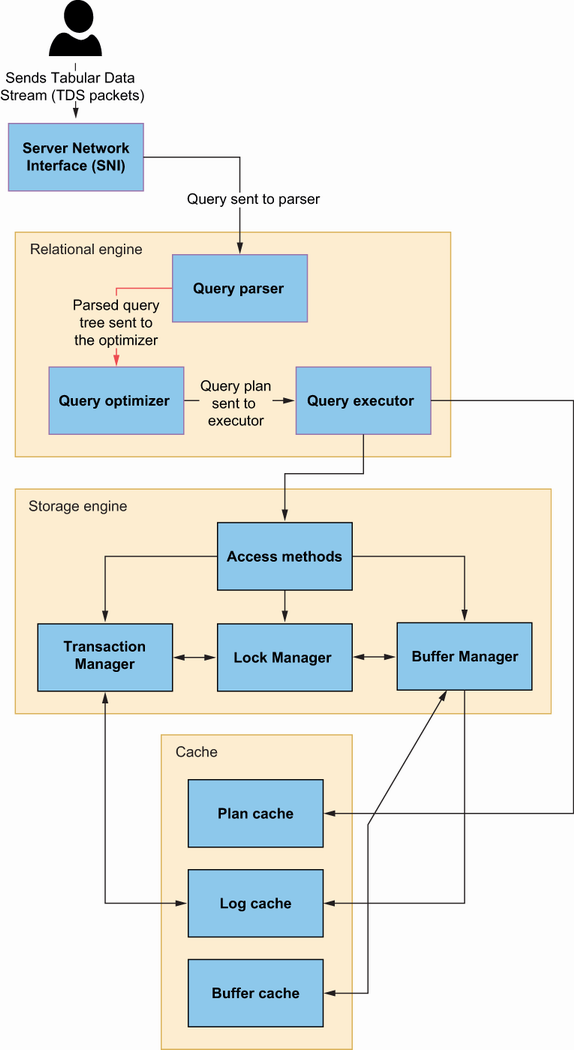
Follow the query path from the application protocol through SQL Server's protocol layer and relational engine. section 1.2.1
























