A parametric model defines 3D geometry through mathematical relationships and constraints rather than fixed coordinates. Changing a parameter updates dependent geometry while preserving the intended relationship. This makes the model useful when a design must remain precise through revisions. section 2.4.2
A cylinder with a dependent height
Define a cylinder by its radius, with the constraint height = 3 × radius. Change the radius, and the height updates automatically. The constraint carries the design intent across both versions. section 2.4.2
In a digital twin, parametric geometry can be modified using sensor readings, reconfigured for simulations, or used to generate variants across a product family. It serves a different purpose from a mesh optimized for efficient visualization: choose the representation according to the decision it must support, rather than assuming every twin needs the same geometric fidelity. section 2.4.2 section 2.7
Figure 2.11 A 3D model derived from a CAD model of the Valhall production platform, a complex industrial facility in the North Sea, shown in Cognite Data Fusion™, an industrial digital twin platform. Image © Cognite™ (https://www.cognite.com/en), reproduced with permission.
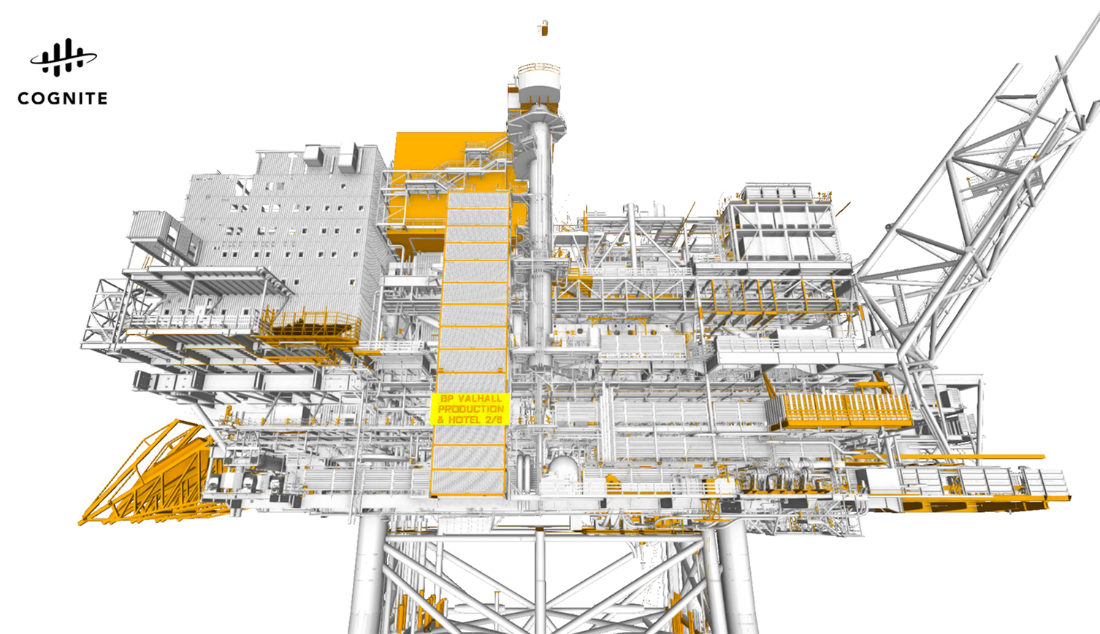
The offshore platform rendering grounds the CAD use case in a complex industrial facility; the image shows a derived 3D model, not its underlying parameters or constraints. section 2.4.2

