Partial password authentication asks users to enter selected characters from their password, identified by numbered positions that can change between attempts. Users must recall the password, count to each position, and transcribe the requested characters. This cognitive burden can make long, complex passwords difficult to use. Although revealing only part of a password may reduce exposure or interception risk, users may resort to insecure notes to manage the mental effort. Requiring characters in a different format from the one in which the password was created is a cognitive function test and fails WCAG Success Criterion 3.3.8, Accessible Authentication (Minimum). section 7.3.1
Figure 7.3 This image shows an example of partial password authentication for an online bank, where users are asked to identify and transcribe randomly selected characters from their password. This often involves mentally counting and recalling character positions.
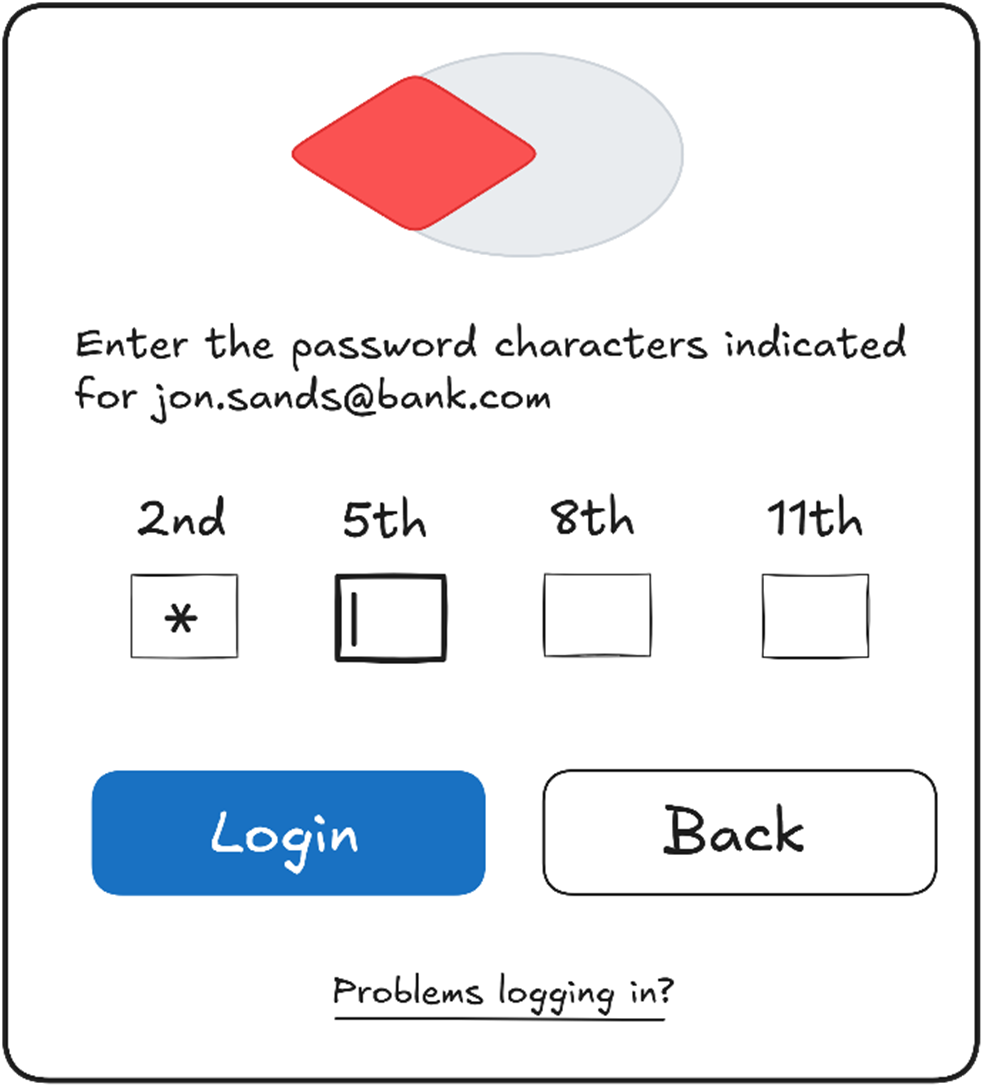
See how a bank requests randomly selected password characters, requiring users to recall and count their positions. section 7.3.1
