liveBook · Manning

PATCH

As explained in Acing the CCNA Exam: Volume 2 Advanced Networking and Security

PATCH is an HTTP request method used to apply partial modifications to a resource.

PATCH is an HTTP method for partially modifying a specified resource. Unlike PUT, which replaces the resource, PATCH changes only the targeted parts. Its exact behavior depends on the API documentation. section 23.2.1

Use PATCH within the HTTP and REST request model:

  • Treat PATCH as an update operation in the CRUD mapping. section 23.2.1
  • Send it from a client to a server for a resource identified by a URI. section 23.4
  • Check the API documentation because HTTP methods do not map identically to CRUD operations in every API. section 23.2.1
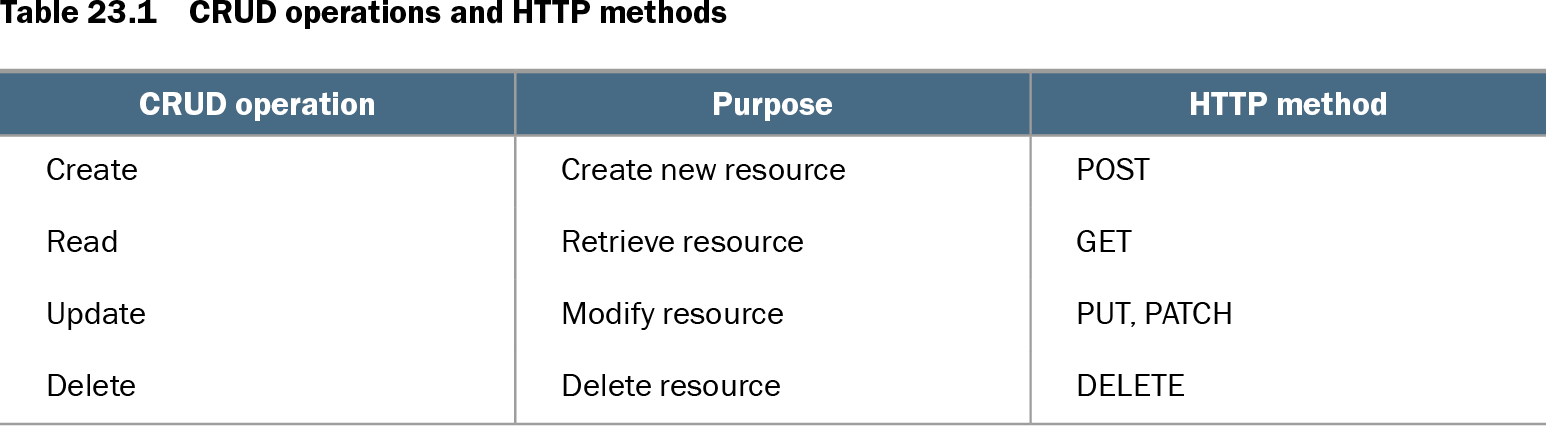
Table 23.1 CRUD operations and HTTP methods (view table figure)

CRUD operation

Purpose

HTTP method

Create

Create new resource

POST

Read

Retrieve resource

GET

Update

Modify resource

PUT, PATCH

Delete

Delete resource

DELETE

Compare PATCH with PUT through the CRUD-to-HTTP method mapping. section 23.2.1

How Acing the CCNA Exam: Volume 2 Advanced Networking and Security covers it

How deep it goes
Defines PATCH and contrasts it with PUT, but does not specify patch-document formats or request-body syntax.
Examples
Uses the CRUD mapping table and contrasts PATCH modification with PUT replacement.
What it assumes
Assumes basic HTTP request concepts and introduces CRUD terminology, resource targeting, and HTTP method roles.
What you can do after
Evaluate PATCH requests as partial updates and distinguish them from replacement requests using PUT.
How it connects
Connects PATCH with HTTP, REST APIs, CRUD operations, PUT, resources, URIs, clients, and servers.

Also explained in

Compare how 4 books explain PATCH →

Related concepts

This explainer was generated by Manning's knowledge graph from the text of Acing the CCNA Exam: Volume 2 Advanced Networking and Security. The section links point to the parts of the book it draws on.