A perceptron is a simple model inspired by a biological neuron. It receives inputs, gives each input a weight, adds the weighted values, and applies an activation rule to produce an output. A weight controls how strongly an input influences the result. section 9.2
Figure 9.5 Logical architecture of the Perceptron
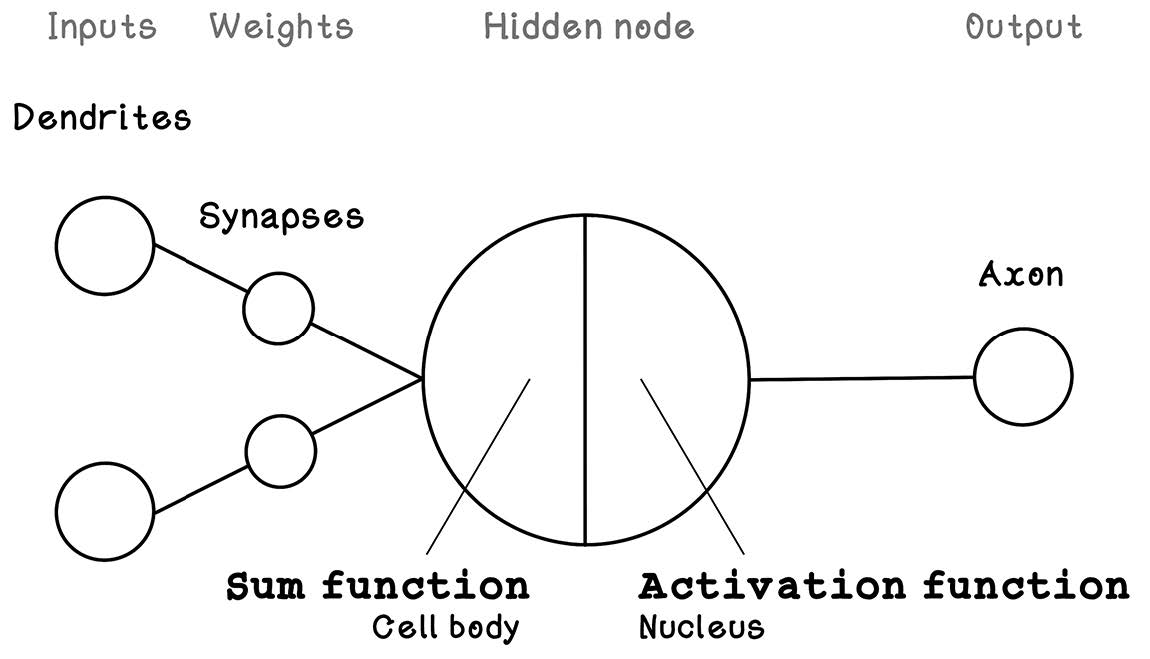
Follow the inputs through their weights to the node that sums them, applies an activation function, and produces the output. section 9.2
Will an apartment rent?
Suppose a real estate agent wants to predict whether an apartment will rent within a month using its size and price. Feed those two values into an already-trained perceptron. Its weights reflect relationships learned during training; the perceptron combines the weighted inputs and produces a prediction. Training is a separate step—the weights are assumed to have been adjusted already. section 9.2
A single perceptron is useful for simple problems, including linear classification. It becomes less feasible as data grows more complex. An artificial neural network extends the same idea across many hidden nodes rather than relying on one. When using such a network, input preparation matters: scaling features to comparable ranges helps prevent a large numeric value, such as speed, from appearing more important merely because of its units. section 9.2 section 9.3




