A performance gap is the difference between expected performance and what a person or team currently demonstrates. Managers address gaps by identifying the need, understanding its context, and providing focused support rather than treating evaluation as a final judgment. section 4.3.1
A practical response to a performance gap includes:
- Assess performance against company expectations, established goals, project deliverables, and a career growth framework. section 4.3.1
- Collect observations, self-assessment, peer feedback, and other manager feedback to support a fair evaluation. section 4.3.1
- Provide resources matched to the individual, such as training, mentoring, leadership seminars, conferences, tools, or personal guidance. section 4.2.6 section 4.3.1
- Correct gaps promptly while considering motivations and aligning personal and professional goals. section 4.3.1
Delegation difficulty
A senior employee who struggles with delegation may need targeted training, a leadership seminar, an experienced mentor, or guidance drawn from a manager’s experience. section 4.2.6
The nine-box ranking approach that takes into consideration performance and potential
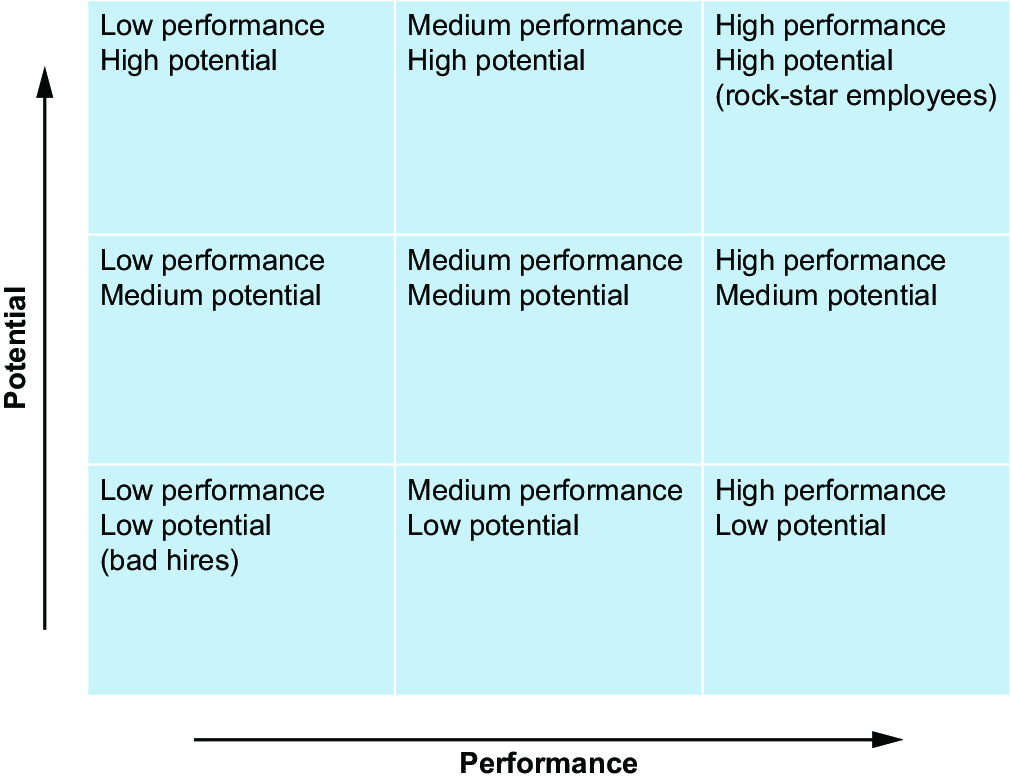
The nine-box ranking approach compares current performance with future potential, helping identify high performers and employees needing training and support. section 4.3.1
