A pipeline instance is one execution of a pipeline definition. A pipeline engine creates it, applies its parameters, runs the defined tasks in sequence, and tracks resulting state and outputs. section 3.1
A pipeline instance typically:
- Runs tasks such as tests, code copying, deployment, virtual-machine provisioning, or user creation. section 3.1
- Shares data generated by one task with subsequent tasks. section 3.1
- Stops and becomes failed when a task errors; otherwise, it can become successful after execution completes. section 3.1
- May remain running for an extended period, depending on its tasks. section 3.1
Figure 3.2 A pipeline definition can be instantiated by a pipeline engine multiple times, and it describes what needs to be done. The pipeline engine creates pipeline Instances, which run the tasks included in the pipeline definition. These pipeline instances can fail or run for longer periods of time depending on the tasks that they are performing. As a user, you can always ask the pipeline engine the status of a particular pipeline instance and its tasks.
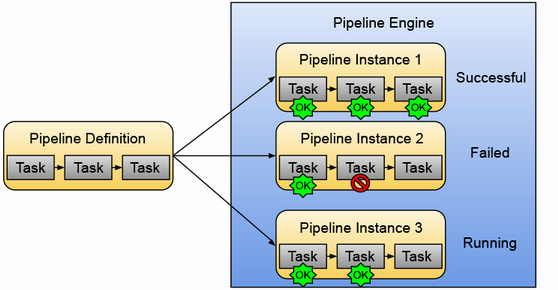
Use the figure to distinguish the reusable pipeline definition from multiple parameterized instances and inspect instance and task status. section 3.1
