A platform extension is a cluster capability that extends the Kubernetes API with a resource type or developer-configurable experience Kubernetes does not natively support. It expands the platform product while preserving a clear distinction from core platform services. section 8.2
Scale extension delivery deliberately:
- Keep extensions within the unified platform product organization during early delivery rather than distributing ownership immediately. section 8.2
- Consider transferring extension responsibility only after the platform is beyond MVP and adoption has reached meaningful scale. section 8.2
- Test responsibility changes between two platform domain teams before expanding the division of work. section 8.2
- Move toward separate release-orchestration pipelines as the number of services and extensions grows, while deployment automation remains local to the cluster. section 8.2
Figure 8.2 The easiest way to understand the difference is to focus on extensions. When deployed, an extension enables developers to provision a resource through the Kubernetes API that Kubernetes does not natively support.
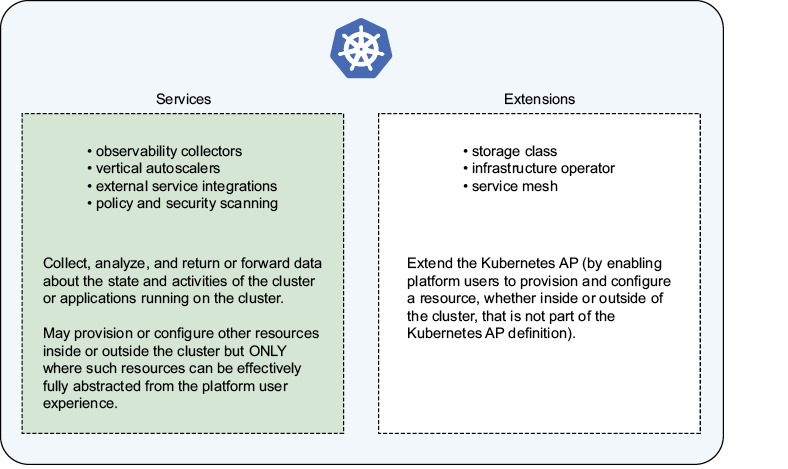
Shows the defining user-facing effect: deploying an extension lets developers provision a resource through the Kubernetes API that Kubernetes does not natively support. section 8.2
