Pod eviction removes Pods from a node when finite resources, especially memory, are under pressure. Kubernetes reclaims capacity by targeting Pods that use more than their requested resources. Pods managed by a Deployment are typically rescheduled, often onto another node. section 5.1.3
Eviction behavior depends on resource configuration and priority:
- Guaranteed Pods set limits equal to requests and are protected from eviction during resource contention. section 5.1.3 section 5.1.2
- Best-effort Pods have no requests or limits and are considered first, beginning with those using the most contested resources. section 5.1.3
- Kubernetes considers Pods using more than their requests, then ranks them by priority and excess use of the contested resource. section 5.1.3
- Frequent evictions reduce workload availability and usually indicate that requests should increase or cluster capacity should be expanded. section 5.1.3
Reading an Evicted status
If a Pod reports Evicted, investigate whether it exceeded its requested resources. An occasional event may be acceptable; repeated events call for larger requests and possibly more compute capacity. section 5.1.3
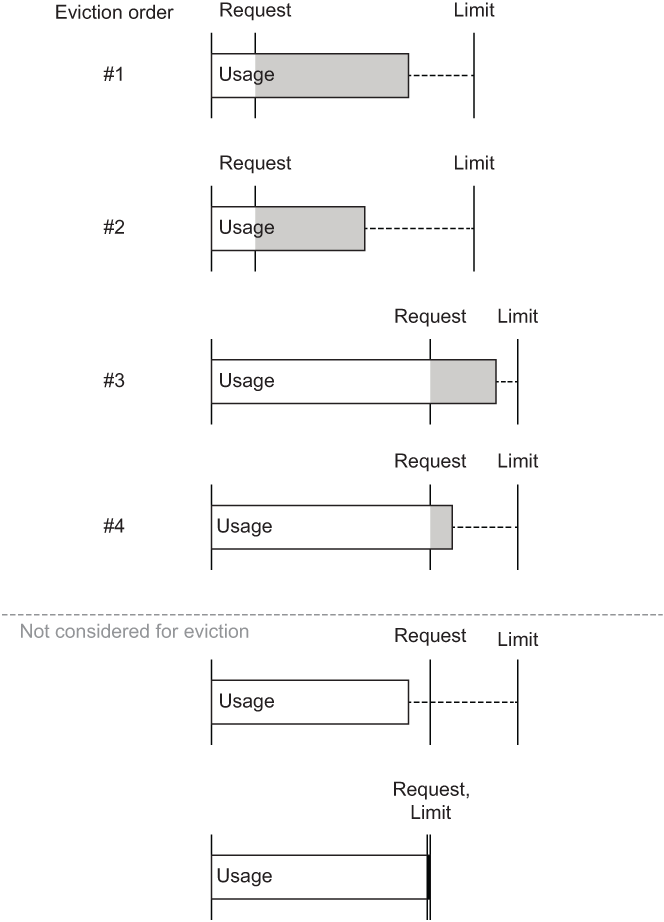
Use the eviction-order figure to compare which equal-priority Pods Kubernetes removes first. section 5.1.3
