Post-incident analysis examines the systemic conditions that allowed an operational failure, rather than asking who caused it. Treat each incident as a chance to change the system, not just document what happened. section 12.6.1
A review should lead to a concrete improvement, such as:
- Adding a pipeline constraint to prevent a mistake. section 12.6.1
- Updating an executable runbook for incident response. section 12.6.1
- Improving an alert and defining the response it should trigger. section 12.6.1
Turn a diagnosis delay into a measured change
If diagnosis takes 22 minutes because an alert points to a symptom, a kaizen card can assign an owner to add causal context to the five most-used alerts, targeting diagnosis under 10 minutes within four weeks. section 12.6.1
Reviews can also expose operational waste that dashboards miss, such as time spent searching for an outdated runbook or comparing environments. Blameless discussion and visible follow-through help make it safe to raise these problems. section 12.6.1 section 13.2
Figure 13.3 The reinforcing loop between honesty, action, and trust.
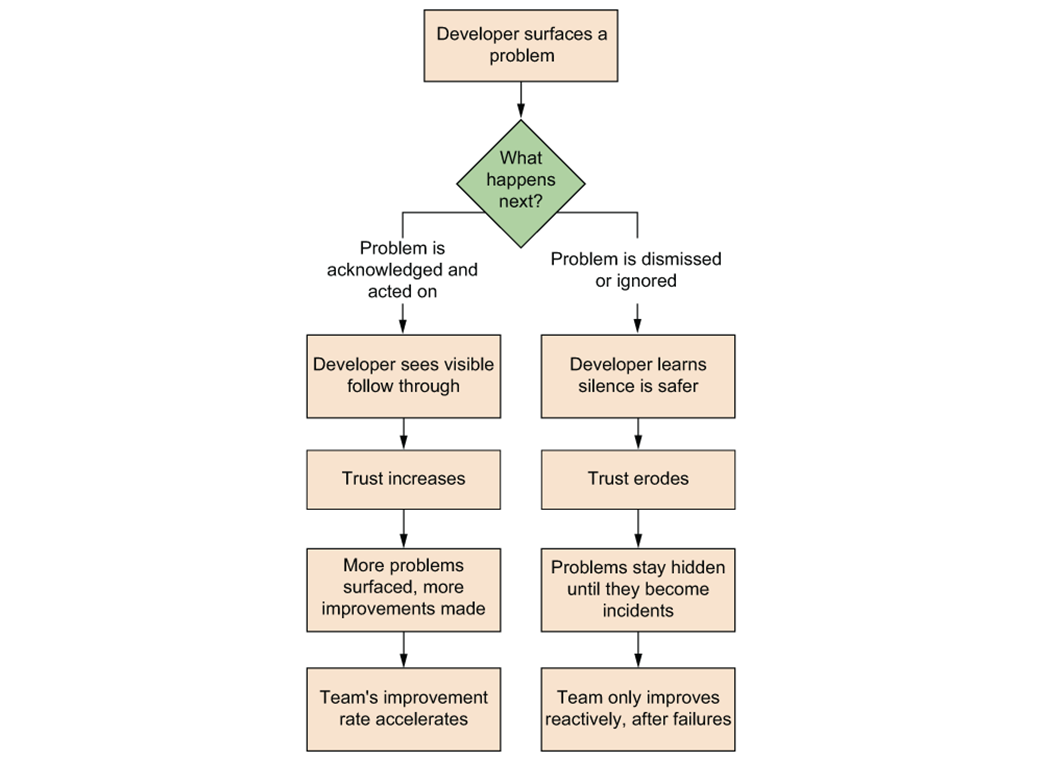
The figure shows how honesty, action, and trust reinforce one another in a review culture. section 13.2


