Post-incident analysis takes place after an incident has been contained, eradicated, and systems restored. It gives the response team and involved stakeholders a chance to review what happened, assess the response, and identify improvements. section 5.3.4
Teams collect and analyze incident data, such as logs, alerts, emails, and forensic document images. Preserve evidence under an evidence collection and retention policy; it may support legal action, compliance, or future investigations. Metrics—including detection and containment times, incident counts, and financial impact—can reveal weaknesses, assess tools and team performance, and inform resource decisions. section 5.3.4
Lessons-learned meetings review the incident and response by asking:
- What was the incident timeline? section 5.3.4
- How did the team and procedures perform? section 5.3.4
- What could be improved? section 5.3.4
The learning feeds back into preparation for future incidents. Lessons-learned meetings can follow major incidents or, when resources allow, address smaller incidents together in regular reviews. section 5.3.4 section 5.3
Figure 5.1 Illustration of the incident response life-cycle.
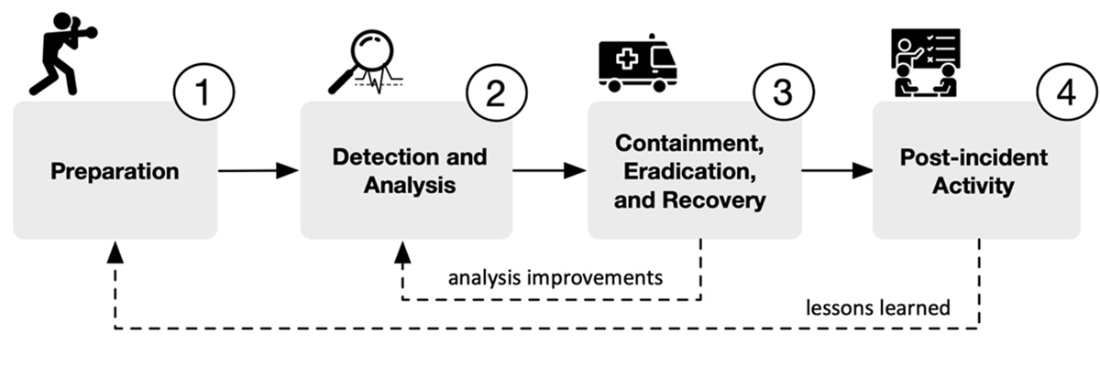
The incident response lifecycle diagram shows post-incident activity as part of a cycle that feeds learning back into preparation. section 5.3


