A presentation attack tries to fool a biometric sensor by presenting an artificial or reproduced biometric artifact, such as a photo, video, fingerprint mold, or AI-generated data. It matters because a system can grant access even when the legitimate person is absent. section 15.1.5 section 15.4
Common presentation-attack paths include:
- Showing a photograph or video to facial-recognition sensors that lack liveness detection. section 15.1.5
- Using a fingerprint mold, fake fingerprint, 3D face mask, or AI-generated voice or face data. section 15.1.5 section 15.4
- Checking for blood flow, muscle movement, or blinking to establish that the biometric input comes from a living person. section 15.1.5
A practical failure mode
A poorly secured facial-recognition login accepts a video or photograph instead of a live user. Liveness detection, encryption, antireplay protections, and user awareness reduce the risk, but compromised biometric traits cannot be replaced like passwords. section 15.1.5
Figure 15.1 Biometric authenticatation is a three-step process. First, a user registers their data. Then the user tries to authenticate and be verified by the system.
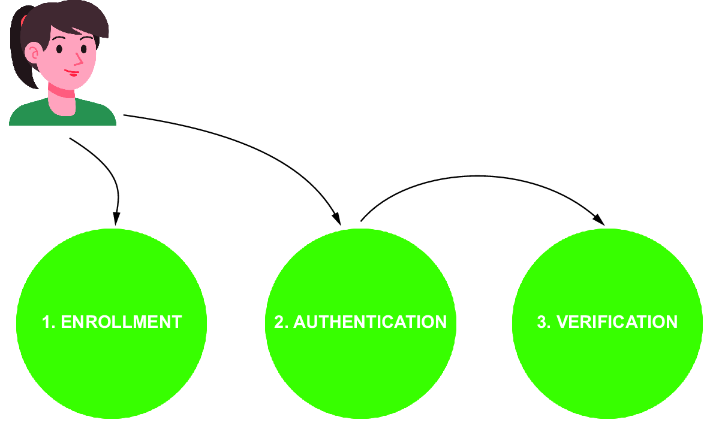
Trace registration, authentication, and verification to see where a presentation attack targets biometric input. section 15.1.5
