Liveness detection checks whether biometric input comes from a living person rather than a photo, video, fingerprint mold, mask, or other replica. It helps prevent presentation attacks against facial, fingerprint, and related biometric systems. section 15.1.5
Modern systems may look for signs such as:
- Blood flow, muscle movement, and blinking. section 15.1.5
- Secure transmission, encrypted storage, and replay protection alongside the liveness check. section 15.1.5
A facial-recognition failure
A system that accepts a photograph or video may grant access to an attacker. Liveness detection instead checks for living-person indicators, while security controls protect the resulting authentication token from theft or replay. section 15.1.5
Figure 15.1 Biometric authenticatation is a three-step process. First, a user registers their data. Then the user tries to authenticate and be verified by the system.
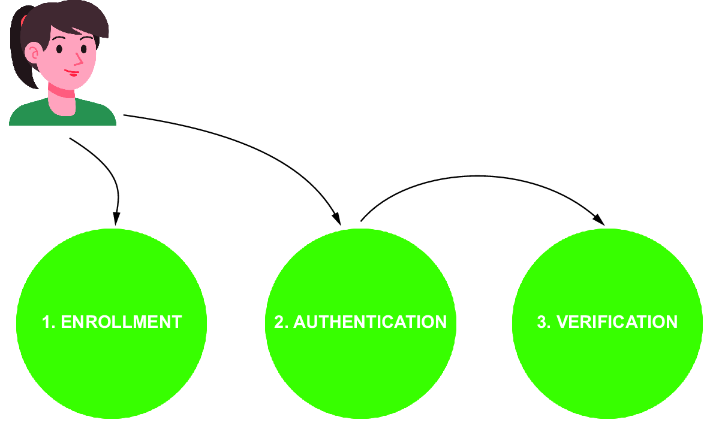
Use the biometric authentication flow to place liveness detection within registration, authentication, and verification. section 15.1.5
