Privileged access management (PAM) governs accounts with elevated permissions. It limits when those accounts are used, what they can do, and how their activity is monitored. section 8.6
Privileged accounts deserve special protection because they may control access for other accounts. If attackers compromise one, they may create accounts, delete accounts, or disable security controls. section 8.6
A PAM system reduces this risk by:
- Granting elevated privileges only when necessary and limiting them to the minimum required for a task. section 8.6 section 8.8
- Providing just-in-time access that expires automatically when the task is complete. section 8.6
- Requiring additional authentication and tightly controlling entry to the PAM system. section 8.6
- Recording who accessed a resource, when access occurred, and what actions were performed. section 8.6 section 10.4.4
- Preventing credential reuse by hiding privileged credentials and rotating them after use. section 10.4.4
Temporary administrator access
An employee receives elevated privileges for one specific task through a PAM system. The access is time-limited, the session is monitored, and the privileges are revoked afterward. section 8.6 section 10.4.4
Figure 8.4 Illustration of the setup of a PAM system.
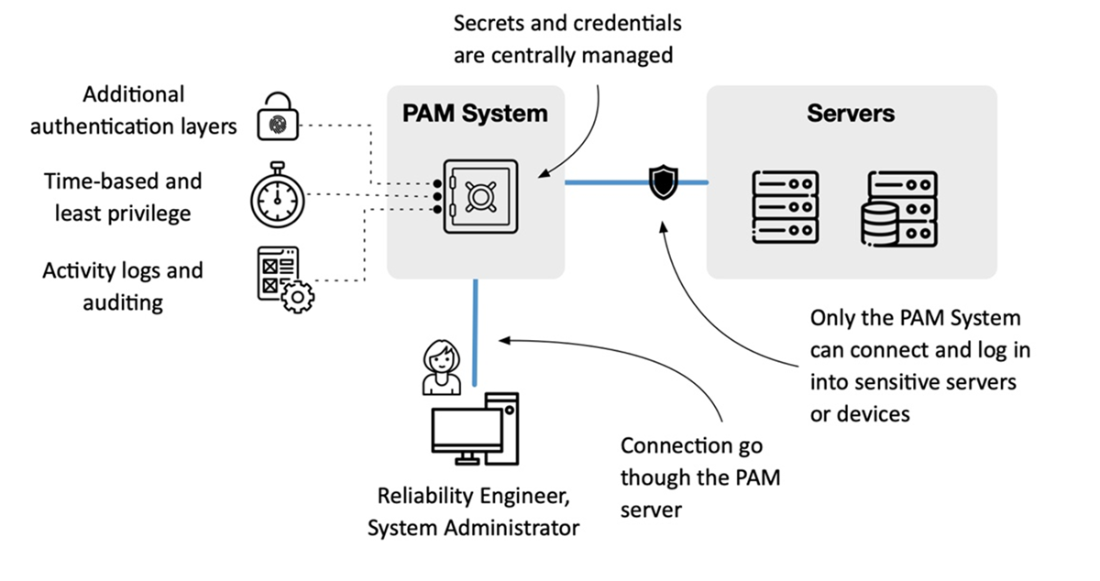
Use the system illustration to follow how controlled access, monitoring, and privileged sessions fit together. section 8.6
