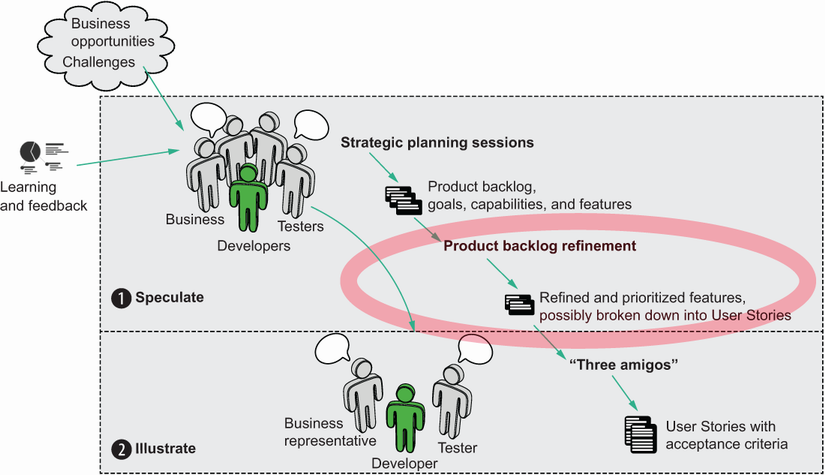
A product backlog is an ordered collection of proposed product work: features, requirements, improvements, or larger epics. It turns business opportunities and problems into work that delivery teams can plan and deliver. Strategic planning repeatedly reshapes the backlog as stakeholders and delivery teams reassess value, assumptions, and risks. section 4.1.1 section 5.1
Refine backlog items collaboratively so that upcoming work is understandable and actionable:
- Add detail, estimates, and order; identify key examples and acceptance criteria. section 5.1
- Split larger features into smaller features or stories when they are difficult to discuss or plan. section 5.1
- Discuss release and iteration goals, while revisiting the backlog regularly through team sessions, research, and discovery preparation. section 5.1
- Use Impact Mapping, Pirate Canvases, or high-level Feature Mapping to connect proposed work with value and delivery coordination. section 4.1.1 section 5.1
From business need to traceable acceptance criteria
A frequent-flyer product can place “Authentication” in the backlog, then link smaller items for email-password access and Google or Facebook single sign-on. BDD feature files record acceptance criteria, while issue identifiers connect each item to the backlog and test results. section 16.3
Use the vocabulary map to distinguish related Agile requirements terms before refining features, epics, and stories. section 5.1
Teams may use a physical board for visibility and communication, while an issue-tracking or Agile project-management system provides a digital backlog. Electronic records support metrics, attachments, and links to BDD tools; Serenity BDD can update issue status from executed tests. section 16.3
