A product roadmap translates product vision and mission into prioritized capabilities and changes. It guides delivery by connecting user needs, business objectives, and technical feasibility. section 10.2.2 section 10.2.5
A useful roadmap supports an evolving product rather than a fixed promise:
- Collect feedback from developers, operations teams, and other stakeholders to identify pain points and opportunities. section 1.3 section 10.2.2
- Prioritize work according to user needs, strategic goals, business value, and technical feasibility. section 10.2.2
- Communicate priorities, progress, timelines, and tradeoffs, then revise plans through regular reviews and new feedback. section 10.2.2 section 10.2.5
- Balance early value with long-term scalability and maintainability through short, iterative delivery cycles. section 3.0 section 10.2.5
A roadmap reduces ad hoc requests and scope creep by making priorities visible. It remains responsive because user needs change as technology, adoption, teams, and product complexity evolve. section 1.3 section 10.2.2
Platform roadmap at Epetech
Research found that manual deployment processes caused developer delays and errors. The roadmap therefore prioritized automated deployment pipelines and self-service infrastructure provisioning, while aligning those investments with faster digital-service delivery, improved reliability, and lower operational costs. section 10.2.2
Figure 10.4 Visual representation of the lifecycle of the platform-as-a-product approach, highlighting how to transition from vision and mission to a fully operational, developer-centric platform
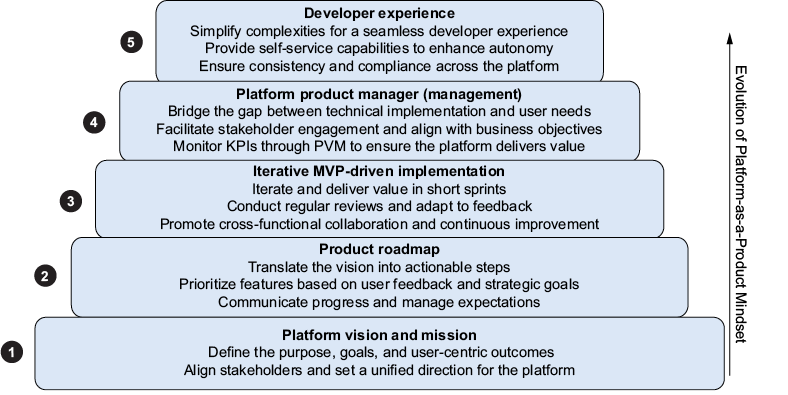
The lifecycle view connects vision and mission, roadmap prioritization, iterative implementation, product management, and operational platform outcomes. section 10.2.5



