PERT estimates project-activity durations when comparable historical data is unavailable. It combines optimistic, pessimistic, and most likely estimates into one expected activity time, accommodating uncertainty in project scheduling. section 13.2 section 13.6
Apply PERT by following this estimation workflow:
- Define the optimistic time (a) as the shortest plausible completion time. section 13.2
- Define the pessimistic time (b) as the longest plausible completion time. section 13.2
- Define the most likely time (m) as the expected duration under normal conditions. section 13.2
- Calculate the weighted expected activity time and assign that value to the task; retain the three estimates as inputs rather than schedule durations. section 13.2
- Obtain estimates from the assigned resources or subject-matter experts, because input quality strongly affects output reliability. section 13.2
Automated reporting tool
For one activity, estimate 2 weeks optimistically, 3 weeks most likely, and 4 weeks pessimistically. PERT produces an expected duration of 3 weeks. Across activities A–L, expected times sum to 39 weeks, but parallel work means this sum is not the project duration. section 13.2
Figure 13.1 An illustration of the beta probability distribution assumed by PERT that displays the optimistic, pessimistic, and most likely activity times. The area under the curve represents the probability of different completion times, with the peak indicating the most likely duration.
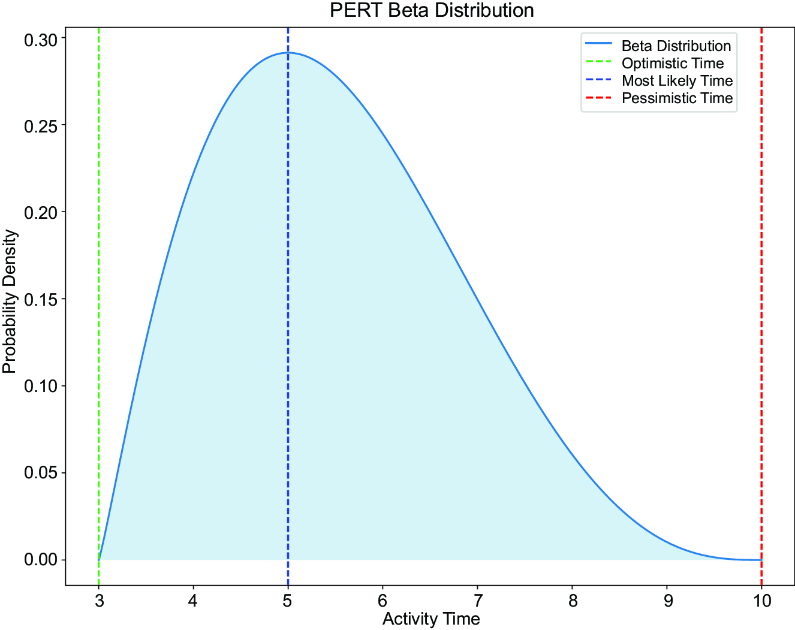
Visualizes the beta probability distribution assumed by PERT, including optimistic, pessimistic, and most likely times and the probability represented by the area under the curve. section 13.2
