Execution environment
An execution environment is the computational context in which a program runs, including its supporting software, available resources, and relevant system state or configuration.

Developer Experience on Kubernetes
A development environment is the configured collection of software, services, and infrastructure in which developers implement and test changes.
- How it is used
- Supports code, test, run, and debug activities in the inner loop for implementing requirements.
- How deep it goes
- Defines common tool packs and evaluates reproducible setup strategies without descending into low-level tool internals.
- Examples
- Uses Go and Java variants, Podman Desktop, and a Flox manifest activated from a terminal.
- What you can do after
- Operate/configure it as a portable, reproducible workspace for local change implementation and validation.
Read how Developer Experience on Kubernetes explains execution environment →

Delivering Machine Learning Projects: From design to deployment
A development environment is a computing environment configured for building and integrating software before formal testing or production deployment.
- How it is used
- Uses development environments to build ML solutions and production execution environments to run models within operational systems.
- How deep it goes
- Provides architecture and readiness checklists for environment resources, access, transitions, and approvals, without specifying a detailed implementation.
- Examples
- Illustrates a smart-building model runtime and a development dashboard prototype spanning a user interface, model server, and data pipeline.
- What you can do after
- Operate/configure an environment by checking resources, access, artifact movement, approvals, and the path to production.
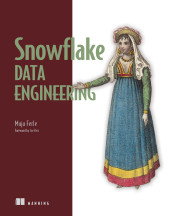
Snowflake Data Engineering
A development environment is an environment in which software is developed and modified before formal testing.
- How it is used
- Supports building, modifying, unit-testing, and optimizing data-pipeline code before controlled testing and production deployment.
- How deep it goes
- Details local Python setup and environment separation, but defers exact installation commands and deployment implementation.
- Examples
- Uses a local Python setup, an IDE, a centralized Git repository, and separated development, test, UAT, and production environments.
- What you can do after
- Build and maintain Snowpark Python applications and data pipelines before deploying them through controlled environments.
Read how Snowflake Data Engineering explains execution environment →
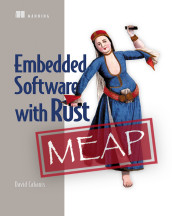
Embedded Software with Rust
A runtime environment is the collection of execution support, hardware state, and software facilities available to a running program.
- How it is used
- Supports firmware startup and execution on microcontrollers without an operating system.
- How deep it goes
- Connects no_std constraints to startup setup and the reset handler, without detailing all initialization steps.
- Examples
- Contrasts desktop std support with embedded no_std and replaces heap-backed Vec with a fixed-size array.
- What you can do after
- Operate/configure: recognize that bare-metal firmware needs startup setup and a minimal runtime.
Read how Embedded Software with Rust explains execution environment →

Build Python Web Apps with Streamlit
A development environment is the collection of software tools, runtimes, and configurations used to create and test software.
- How it is used
- Sets up and maintains the workflow for building, testing, and deploying Streamlit applications.
- How deep it goes
- Explains setup choices and dependency alignment, but stops short of detailed runtime internals.
- Examples
- Uses a Streamlit password checker, requirements.txt files, and mismatched requests versions as concrete examples.
- What you can do after
- Configure and reproduce a Streamlit environment across development and Streamlit Community Cloud.
Read how Build Python Web Apps with Streamlit explains execution environment →
Also covered in
- Rust Web Development
- Contract Testing in Action
- Lead Developer Career Guide
- GitHub Actions in Action: Continuous integration and delivery for DevOps
- D3.js in Action, Third Edition
- Road to Kubernetes
- High Performance Unity Game DevelopmentIn early access (MEAP)
- Agent Design PatternsIn early access (MEAP)
- Designing Deep Learning Systems: A guide for software engineers
- Designing AI AgentsIn early access (MEAP)
- Systems Programming with ZigIn early access (MEAP)
- Think Like a CTO
What to know first
- productionProduction is the live operational setting in which a deployed software system serves its intended users or processes real workloads.
- pipelineA pipeline is an ordered sequence of connected processing stages through which data or work flows, with each stage passing or transforming its output for subsequent stages.
- containerA software container is an isolated execution environment that packages an application and its dependencies, typically sharing the host operating-system kernel.
- deployment pipelineA deployment pipeline is a repeatable sequence of stages that builds, tests or validates, packages, and delivers software changes toward release or deployment.
Related concepts
- futureused by · A future is an abstraction representing an asynchronous computation’s result, which may become available later and may be pending or complete.
- Ollamaincludes · Ollama is software for downloading, managing, running, and serving language models locally.
- operatoruses · An operator is a computational node in a machine-learning model graph that performs a defined operation on its inputs to produce outputs.
- guardrailincludes · A guardrail is a constraint, control, or monitoring mechanism that limits system behavior to reduce risks and keep actions or outputs within acceptable bounds.
- sandboxingincludes · Sandboxing is the isolation of software execution in a restricted environment that limits access to resources and effects on surrounding systems.
- Tokioincludes · Tokio is a Rust asynchronous runtime and library that provides task scheduling and facilities for asynchronous I/O.
Questions about execution environment
What is execution environment?
An execution environment is the computational context in which a program runs, including its supporting software, available resources, and relevant system state or configuration.
Which Manning books explain execution environment?
Developer Experience on Kubernetes, Delivering Machine Learning Projects: From design to deployment, Snowflake Data Engineering, Embedded Software with Rust and Build Python Web Apps with Streamlit.
What should I know before learning execution environment?
Manning books that teach execution environment usually introduce production, pipeline, container and deployment pipeline first.
What kinds of execution environment are there?
Kinds of execution environment include Ollama, guardrail, sandboxing and Tokio.
What is execution environment also called?
Execution environment is also called runtime.
These guides are generated from the text of Manning books by Manning's knowledge graph and link to the sections they draw on. The full books are available on liveBook and at manning.com.