Project planning defines the work, requirements, estimates, budget, responsibilities, and intended business result before development proceeds. For lead developers, it connects technical decisions with client and stakeholder needs. section 2.1.3
A practical planning cycle includes:
- Meet clients and stakeholders to clarify business requirements, expected results, and business drivers. section 2.1.3
- Translate business requirements into technical requirements and estimate the technical work. section 2.1.3
- Work with the project manager on the budget and address inaccurate estimates with the project team and stakeholders. section 2.1.3
- Keep the intended result in view, such as supporting end users, increasing brand awareness, driving sales, or retaining customers. section 2.1.3
Clarifying an estimate
If an estimate is too low, bring the project team and stakeholders together to confirm what result is needed, why it matters, and whether the technical work or expectations must change. section 2.1.3
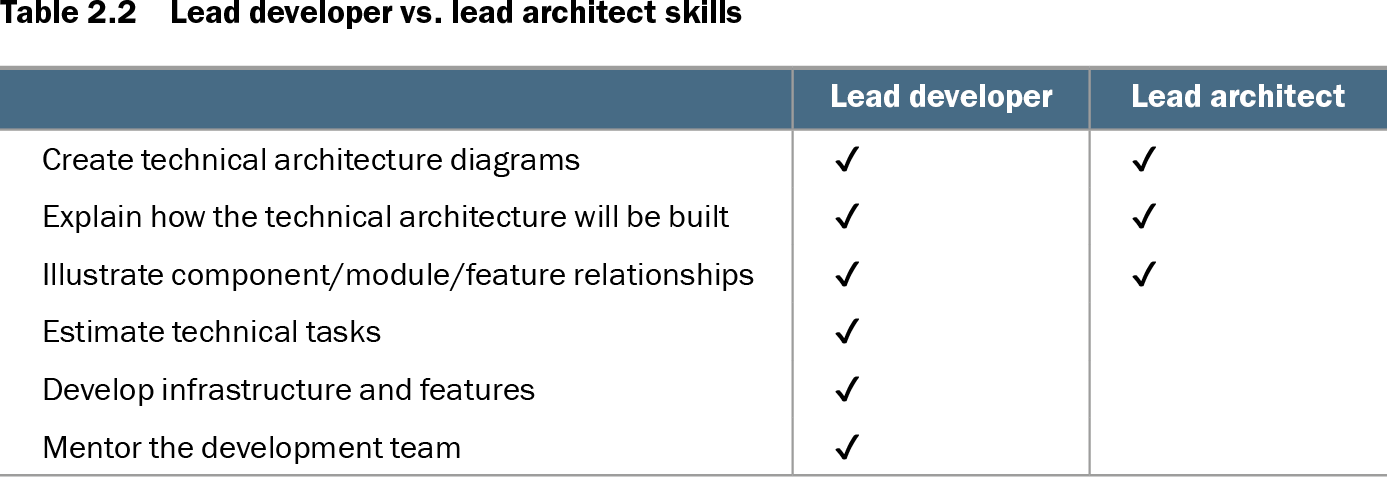
Table 2.2 Lead developer vs. lead architect skills (view table figure)
| Lead developer |
Lead architect |
|
|---|---|---|
| Create technical architecture diagrams |
✓ |
✓ |
| Explain how the technical architecture will be built |
✓ |
✓ |
| Illustrate component/module/feature relationships |
✓ |
✓ |
| Estimate technical tasks |
✓ |
|
| Develop infrastructure and features |
✓ |
|
| Mentor the development team |
✓ |
Compare lead developer and lead architect responsibilities, including technical estimation, infrastructure, architecture, and team mentoring. section 2.1.3