ProteinMPNN designs amino-acid sequences predicted to fold into a supplied protein backbone. This task, called inverse folding, reverses the usual direction of predicting structure from sequence. section 13.2.1
The model uses a message passing neural network on a protein backbone graph: residues are nodes, and proximity relationships define edges. In therapeutic protein design, it can help find sequences for a desired binding geometry, while stability and immunogenicity remain important design concerns. section 13.2.1
Designing a protein binder
RFdiffusion can generate a binder backbone for a target site. ProteinMPNN then designs sequences to fit that backbone, and AlphaFold2-Multimer can assess the resulting protein complex’s interactions and stability. section 13.2.1
Figure 13.2 The user provides an amino acid sequence to AlphaFold2, which predicts the target protein structure using multi-sequence alignment as we saw in figure 13.1. RFdiffusion uses the target protein structure to design a protein binder, though it only generates the backbone of the protein binder. RFdiffusion can be steered by the user to explore specific binding interfaces, or hot spot regions of the target protein and identify the most favorable binding configurations according to desired design constraints. Next, ProteinMPNN generates and optimizes amino acid sequences that fit into the RFdiffusion-generated protein backbone, ensuring they exhibit target biochemical properties for effective binding. Finally, AlphaFold2-Multimer is used to validate the interactions and stability of the resulting protein complexes. This integrated approach enables precise and efficient design of protein binders, facilitating advancements in therapeutic protein development and other protein engineering applications.
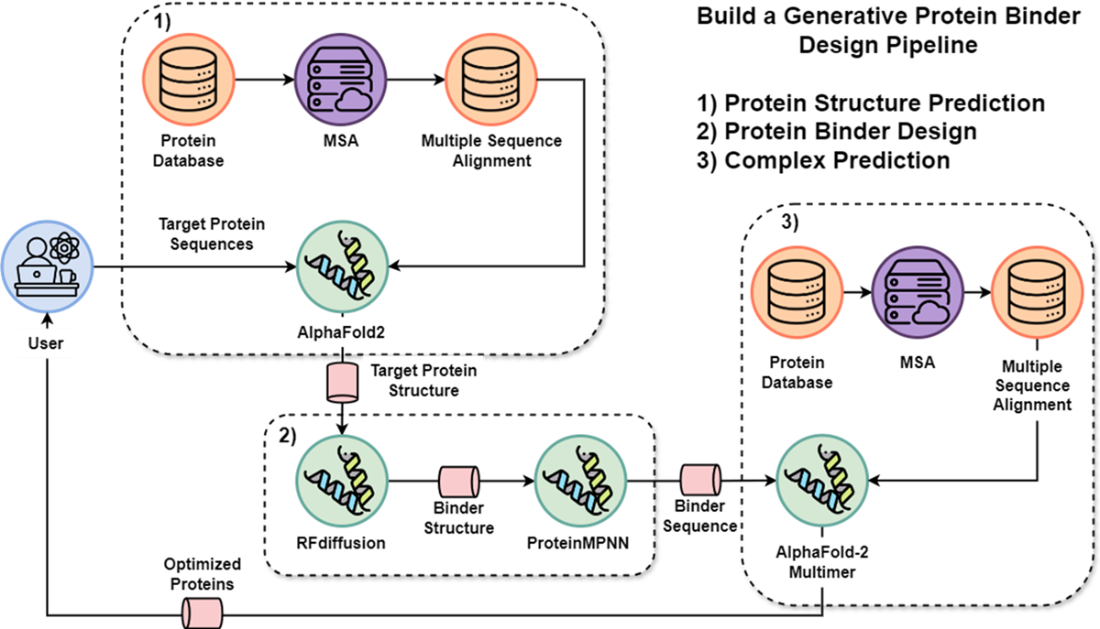
Follow the binder-design workflow from target structure prediction through sequence design and complex assessment. section 13.2.1
