liveBook · Manning

Proxy

As explained in Microservices Patterns, Second Edition

A provider proxy is an intermediary component that invokes a provider service and applies behavior such as resiliency controls or fallback handling.

A provider proxy mediates synchronous calls from an API composer to a provider service, applying resiliency controls and, when needed, fallback behavior. section 12.3.3

A proxy can combine failure controls with fallback strategies:

  • Use circuit breakers, time limiters, and bulkheads; retries and rate limiters are also possible. section 12.3.3
  • When a provider is unavailable, return cached data or a hardwired value. Cached data may be stale, and caching requires a meaningful key. section 12.3.3
Figure 12.9 Improving the resiliency of the findOrder() system query by using the resiliency patterns
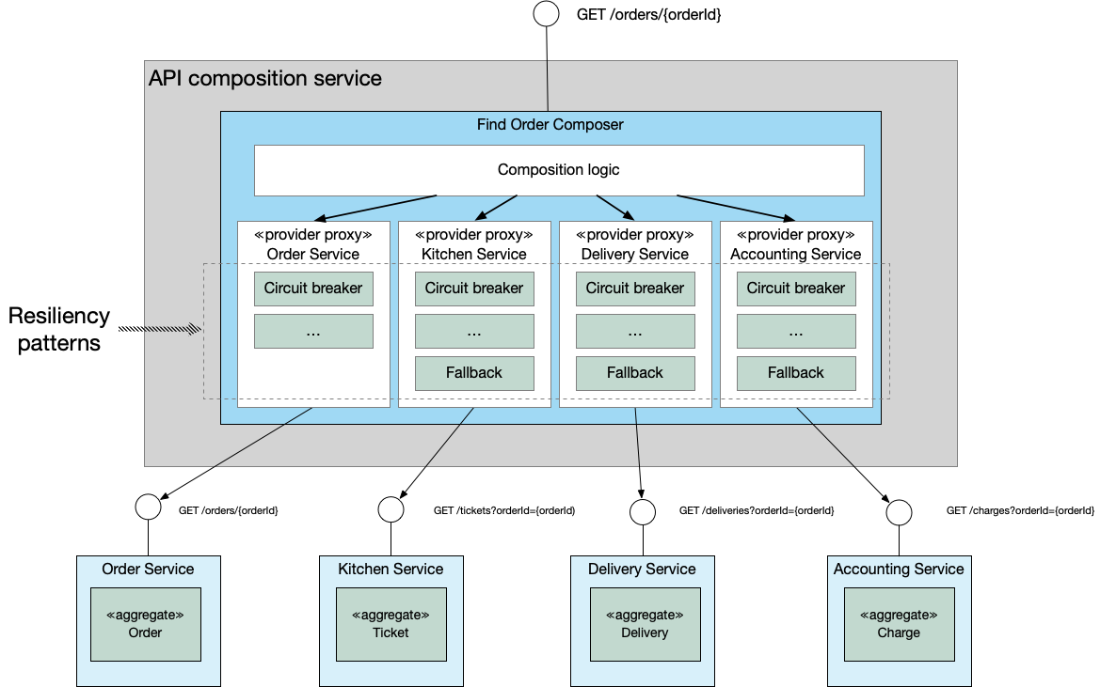
FindOrderApiBasedQueryUsingResiliencyPatterns

See how resiliency patterns are placed around provider calls in the findOrder() system query. section 12.3.3


How Microservices Patterns, Second Edition covers it

How deep it goes
Specifies proxy controls and cached-data fallback trade-offs, without detailing their implementation.
Examples
Illustrates proxy resiliency in the findOrder() system query and cached-data or hardwired-value fallbacks.
What you can do after
Configure provider proxies with resiliency controls and fallback strategies that trade freshness for availability.
How it connects
Connects API composition with circuit breakers, time limiters, bulkheads, retries, rate limiters, caching, and fallback.

Also explained in

Compare how 6 books explain proxy →

Related concepts

This explainer was generated by Manning's knowledge graph from the text of Microservices Patterns, Second Edition. The section links point to the parts of the book it draws on.



