liveBook · Manning

Pruning

As explained in Grokking AI Algorithms, Second Edition

Pruning is the removal or restriction of branches in a decision tree to reduce excessive specificity and improve generalization.

Pruning trims decision-tree branches that have become too deep or specific. Like a gardener shaping a tree, it helps the model learn general patterns instead of memorizing training examples. section 8.17

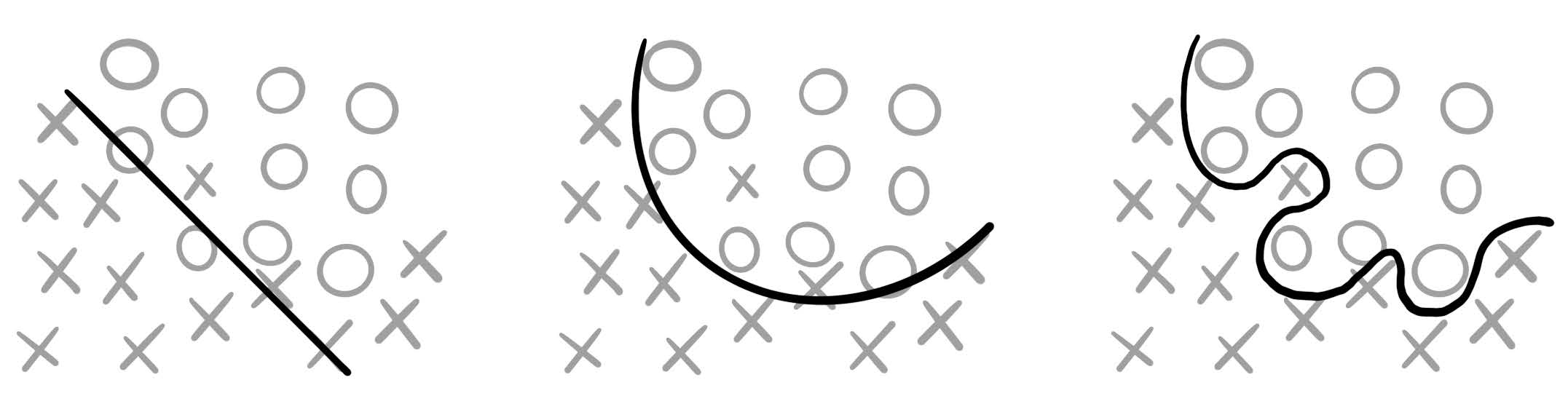
The technique addresses overfitting: a tree may achieve perfect training accuracy yet perform poorly on unseen data because it learned narrow patterns and splitting criteria. Pruning aims for the balance between underfitting and overfitting. section 8.17

A warning sign

A decision tree classifies every training example correctly, but new examples receive poor classifications. Treating the perfect training score as a red flag, pruning removes overly specific branches so broader patterns guide predictions. section 8.17

Figure 8.26 Underfitting, ideal fit, and overfitting
08_26

Compare underfitting, an ideal fit, and overfitting visually. section 8.17

How Grokking AI Algorithms, Second Edition covers it

How deep it goes
Defines the intuition and purpose of pruning but does not specify an implementation procedure or pruning criterion.
Examples
Uses a gardener analogy, perfect training accuracy, poor unseen-data performance, and a fit-comparison figure.
What it assumes
Assumes familiarity with decision-tree training and distinguishes overfitting from underfitting through classification performance.
What you can do after
Diagnose overfitting through the gap between training and unseen-data performance and recognize pruning as a remedy.
How it connects
Connects pruning with decision trees, overfitting, underfitting, training accuracy, and unseen data.

Also explained in

Compare how 7 books explain pruning →

Related concepts

This explainer was generated by Manning's knowledge graph from the text of Grokking AI Algorithms, Second Edition. The section links point to the parts of the book it draws on.





