A public key is the shareable half of a cryptographic key pair. In HTTPS, a server sends its public key so a browser can encrypt data that only the server’s private key can decrypt. section 28.2
Keep these roles distinct:
- Public key: distributed openly and used by the browser for encryption. section 28.2
- Private key: retained by the server and used to decrypt data encrypted with the public key. section 28.2
- Certificate trust: depends on a trusted certificate authority and root certificate, not merely on possessing a public key. section 28.2
HTTPS development certificate
When an ASP.NET Core application uses a development certificate, the server presents its public key to the browser. An untrusted certificate can trigger a browser warning even though the public/private key relationship still supports HTTPS encryption. section 28.2
Figure 28.4 The developer certificate is not trusted by default, so apps serving HTTPS traffic using it will be marked as insecure by browsers. Although you can bypass the warnings if necessary, you should instead update the certificate to be trusted.
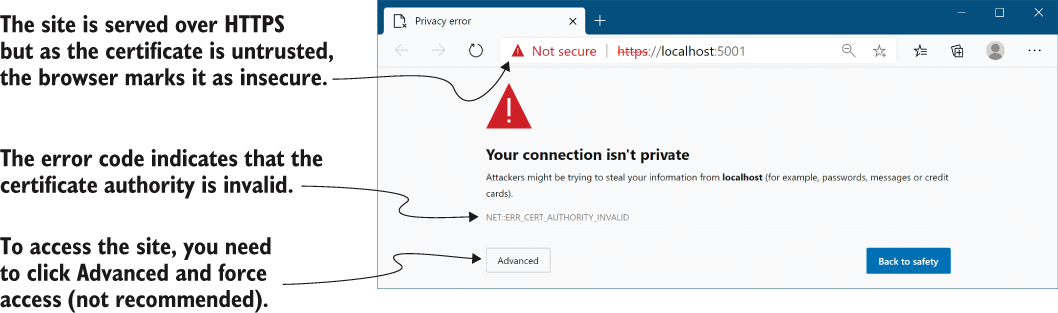
Use the figure to recognize how an untrusted development certificate appears in a browser. section 28.2







