Quality means building correctness and defect prevention into work, rather than relying on later inspection. Make architectural constraints visible before implementation so developers and AI agents can follow them from the start. section 1.2.4
Make the constraints actionable with checks that:
- Flag forbidden database access with linter rules and clear build errors; keep the pattern in an architecture decision record and code templates. section 1.2.3
- Run load tests for database changes before staging, failing the build when query times exceed thresholds or locks are detected. section 1.2.3
A constraint enforced early
When storage work must follow event sourcing, a linter can reject direct database access during the build instead of leaving the violation for code review to catch. section 1.2.3
Figure 1.4 Work loop with Lean interventions, addressing specific failure modes from the notification preferences scenario.
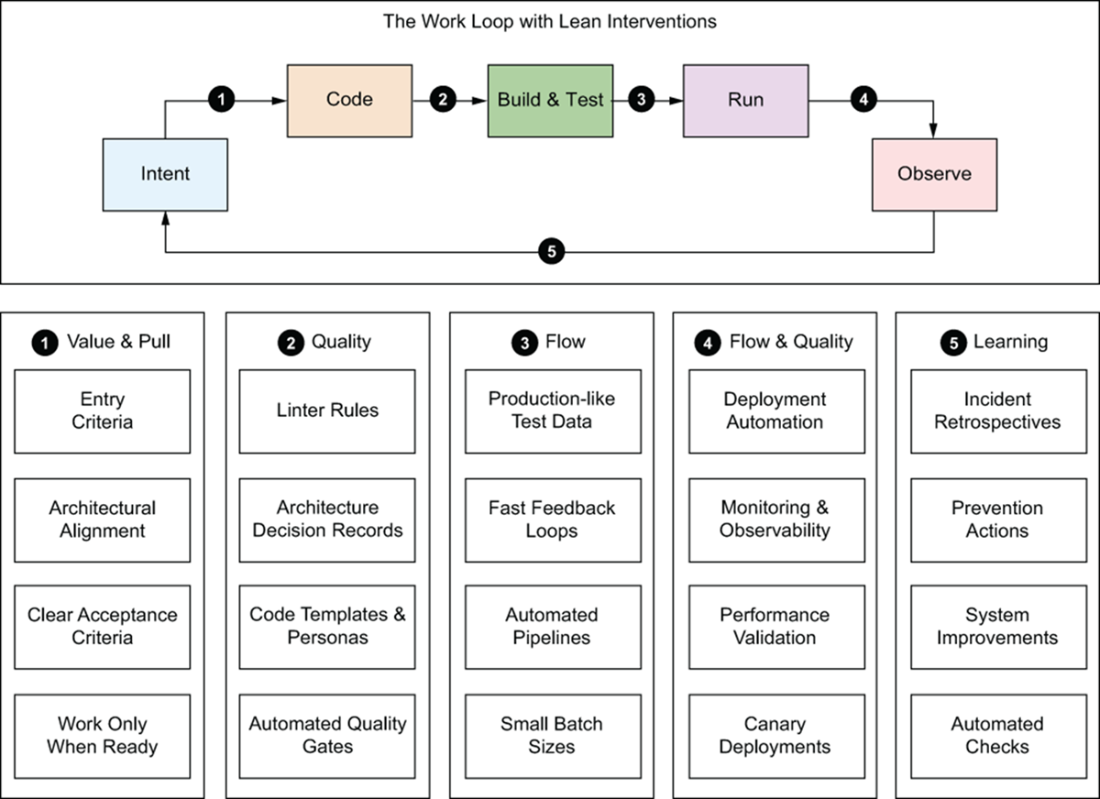
See where quality checks fit in the delivery work loop alongside other Lean interventions. section 1.2.4
