Radical empathy actively seeks to understand people’s feelings and perspectives, including experiences unlike your own. It goes beyond emotional support by examining societal, organizational, and personal factors behind conflict or hardship, then addressing underlying problems. section 11.3 section 11.3.1
Practice radical empathy by:
- Listening to people you disagree with or dislike, and trying to understand why they feel as they do. section 11.3
- Looking beyond individual behavior to social, cultural, organizational, and personal factors that shape the experience. section 11.3.1
- Recognizing cognitive bias, inviting open dialogue, and valuing disagreement as a source of learning and creative problem-solving. section 11.3.2
- Using understanding to de-escalate conflict, find common ground, and support collaborative solutions rather than responding defensively. section 11.3
Supporting an invisible disability
A manager who notices an employee’s stutter does not avoid the issue or talk over them. Instead, the manager asks questions, listens, assures the employee they will not be discriminated against, and addresses barriers affecting their success. section 11.3.1
Figure 11.5 Defining empathy and radical empathy
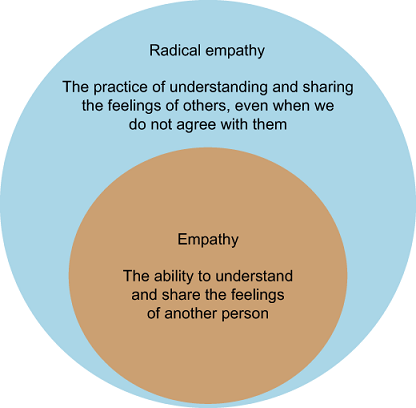
Compare traditional empathy’s focus on individual emotions with radical empathy’s broader context, action, and social-change orientation. section 11.3
